News

Two bioengineers from the Phil and Penny Knight Campus for Accelerating Scientific Impact have been elected to leadership positions in the Tissue Engineering and Regenerative Medicine International Society (TERMIS), a group dedicated to advancing tissue engineering and regenerative medicine worldwide to improve patient outcomes globally.

The Knight Campus Department of Bioengineering is fast becoming an irresistible destination for high-performing faculty and students. Read more about all of the ways we are pushing the boundaries of discovery, innovation, and impact in the BioE Annual Report 2025.

MKS Instruments has renewed its commitment to student success with a five-year pledge to the Knight Campus Graduate Internship Program’s (KCGIP) Inclusion Initiative

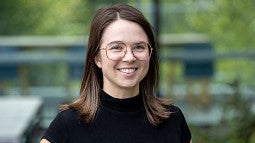
Get to know one of our newest hires! Therapeutic ultrasound engineer Sara Keller joined the department in January 2026, bringing new techniques and applications for image-guided therapeutic ultrasound.

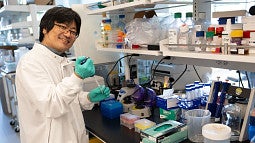
Get to know one of our newest hires! Nanomaterial immunoengineer  David Peeler joined the department in January 2026, bringing research with the potential to improve antimicrobials, immunotherapies and vaccines.

The iGEM team based in the Knight Campus is seeking undergraduate students and mentors for their 2026 synthetic-biology related project. iGEM is an organization that hosts a yearly synthetic biology competition between student-led teams from around the world. Apply by January 18th!

New research from the Plesa lab offers a tool for scientists to find exact DNA sequences from large libraries in a fraction of the time.

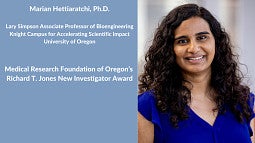
Knight Campus graduate students Anissa Benabbas (Plesa Lab) and Malvika Singhal (Hettiaratchi Lab) took first place in the Science Coalition Student Video Challenge.

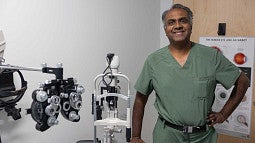
Bala Ambati has received nearly $500,000 in funding from iVEena Delivery Systems, Inc. and the National Institutes of Health (NIH) to advance a new therapeutic for nearsightedness, the leading cause of vision loss globally.
Tim Gardner has received a $350,000 award from the Dr. Miriam and Sheldon G. Adelson Medical Research Foundation (AMRF) to accelerate the development of next-generation neural-interface technologies for studying brain injury and repair.