Bioengineers Lindberg and Dalton have received OPVRI seed funding to develop implantable conduits that capture glioblastoma cells and could one day limit brain tumor growth.
Researchers at the Lindberg Lab have developed a new method for keeping lab-grown tissue alive by packing oxygen-releasing particles and living cells into separate microscopic spheres within a 3D-printed scaffold, and earned the back cover of Advanced Healthcare Materials for it.
Bioengineering Ph.D. candidate DeShea Chasko has been awarded a competitive National Institutes of Health (NIH) Individual Predoctoral Fellowship (F31) to support her research creating 3D bioprinted bone marrow models.
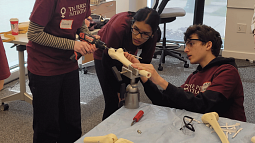
Professionals, bioengineering faculty, PhD students and undergraduates from the Knight Campus lead hands-on training in partnership with Slocum Research and Education Foundation and the Perry Initiative
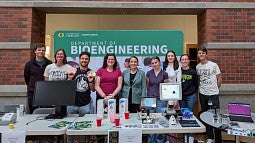
Members from the department of bioengineering tabled an event at the Office of the Vice President for Research and Innovation's week of research and innovation, to showcase bioengineering research for undergraduate students.
Two bioengineers from the Phil and Penny Knight Campus for Accelerating Scientific Impact have been elected to leadership positions in the Tissue Engineering and Regenerative Medicine International Society (TERMIS), a group dedicated to advancing tissue engineering and regenerative medicine worldwide to improve patient outcomes globally.
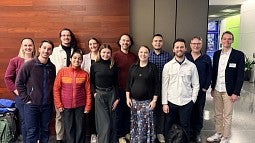
Researchers from the Phil and Penny Knight Campus for Accelerating Scientific Impact participated in the Cascadia Corridor Research Symposium in Seattle, highlighting the range of research taking place across the Knight Campus.
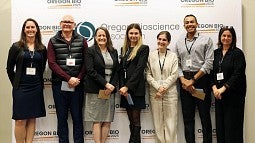
Three Knight Campus–affiliated startups earned top recognition at the Oregon Bio 2025 Conference and Innovation Showcase, held at Portland Community College’s Rock Creek Campus.