
Current research projects
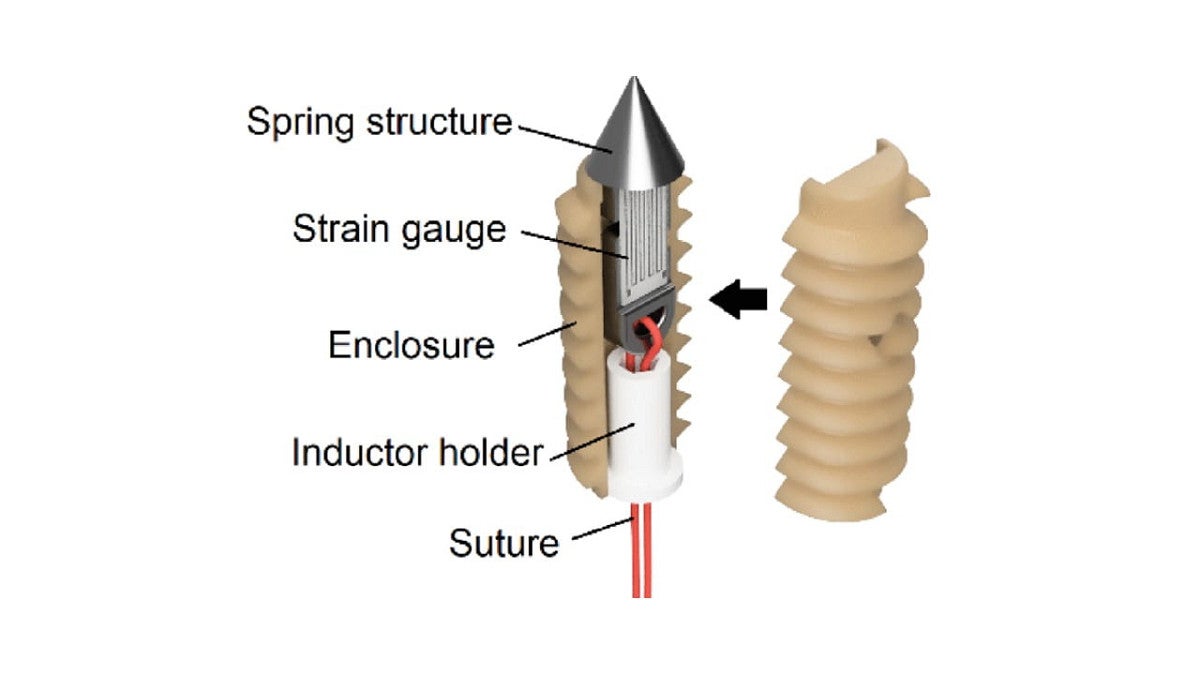
Our lab has developed multiple embedded sensors for monitoring different medical conditions. These embedded sensors are passively powered wireless sensors that can be integrated with medical devices such as suture anchors to measure tensile stress during soft tissue repairs, such as ligament and tendon surgeries.
These innovative sensors are based on LCR circuits which can be interrogated wireless, allowing it to measure the mechanical environment while the devices remaining implanted without any active power source. These sensors are ideal for both short- and long-term implants.
Our research has demonstrated its potential to improve the quality of surgical repairs and monitor implant integrity post-surgery.
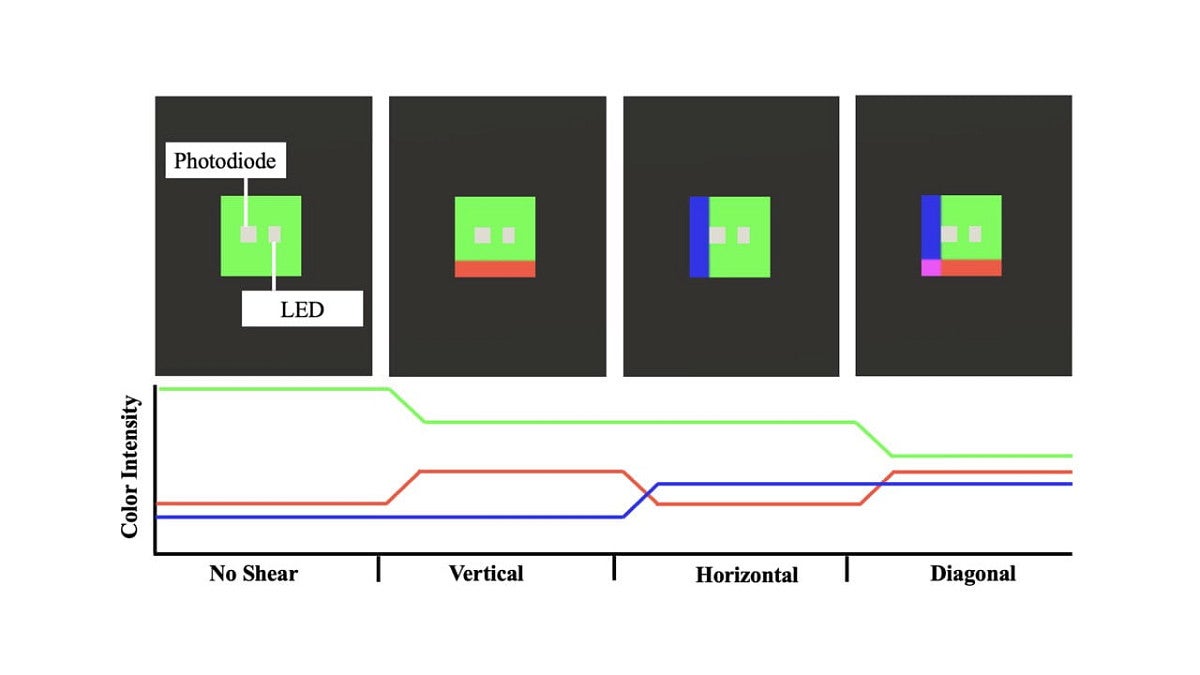
Researchers from the Ong Lab are developing a multi-axial shear displacement and force sensor for biomedical and industrial applications. The sensor is based on optoelectronic coupling between broad spectrum light from an LED, reflected off a color pattern, and measured via a photodiode with bandpass filters at the red, green, and blue wavelengths. The sensor operates in a reflective mode, whereby the LED and photodiode are separated from the color pattern by an elastomeric media, allowing measurement of both displacement and force.
Historically, size, mass, and power constraints have limited the use of other shear sensors for wearable applications. Our optoelectronics-based approach is comparatively, smaller, lighter weight, and lower power than traditional capacitive designs. Furthermore, the sensor can differentiate between horizontal and vertical shearing; this feature has largely been limited to heavy strain gauges that require a wired power source. The sensor is also contactless with a scalable design to expand its use for a variety of biomedical and industrial applications.
The lack of consistent and efficient production methods has been a limiting factor for broad translation of stem cell research to clinical therapies due to challenges in quantification and monitoring of cell growth and quality. State-of-the-art technology for monitoring cell number and quality in anchorage-dependent cells often relies on measuring the DNA content, analyzing metabolic activity, or staining/detaching the cells. The harsh and invasive nature of these methods increases the likelihood of procedural error in cell measurement and reduction in cell quality. Furthermore, these manual methods of assessing the quality of cells are difficult to integrate within an automated feedback-controlled process, limiting their use for large-scale manufacturing of stem cells. The development of a platform that can non-invasively provide real-time measurement of cell number and other critical process parameters (CPPs) would be an invaluable asset for developing automated feedback-controlled processes and, as a result, cell-culture for therapeutic and research applications.
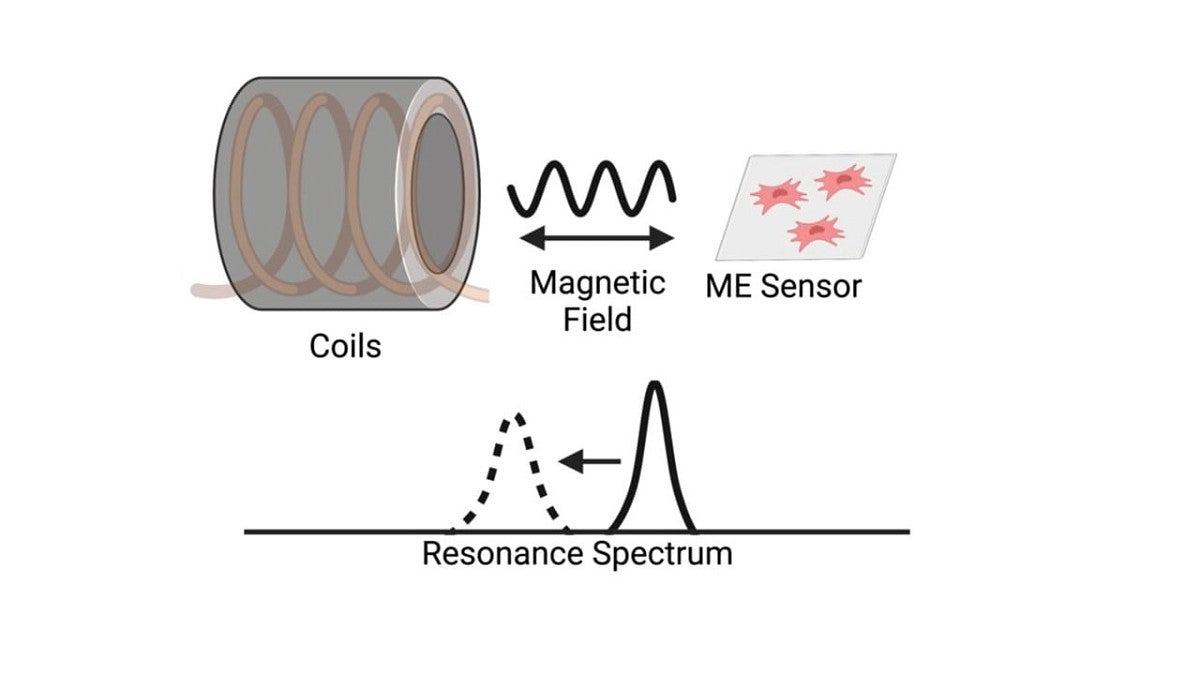
The objective of this project is the realization of a magnetoelastic sensing system capable of remotely tracking cell number, stages of cell growth, and critical process parameters (CPPs). Magnetoelastic sensors are a battery-free embedded sensing platform that are interrogated wirelessly via magnetic fields. When subjected to appropriate magnetic field excitation, these sensors undergo mechanical vibration, which generates a secondary magnetic field that can be remotely captured. Sensing of cell loading on the sensor is achieved by monitoring changes in the sensor’s resonance spectrum.
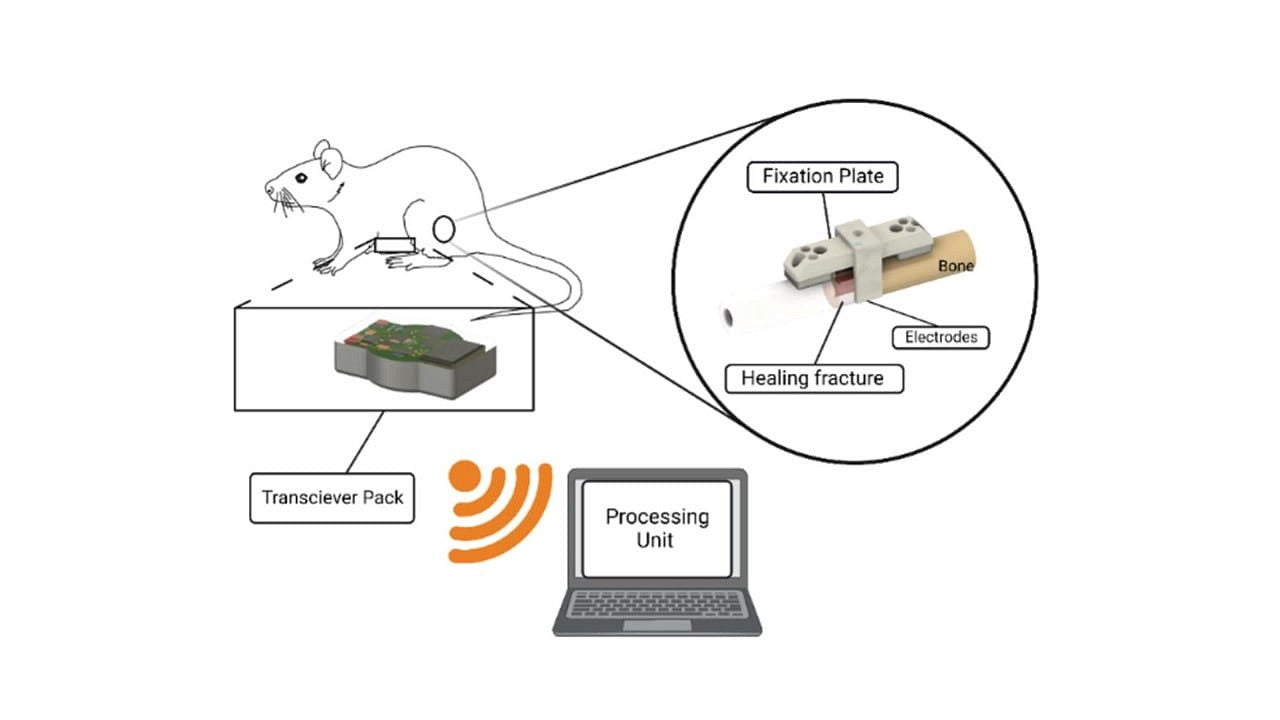
The Ong Lab is developing an implantable device to study the relationship between fluid flow and bone regeneration, aiming to apply it therapeutically. The device uses magnetohydrodynamics, leveraging Lorentz force to generate fluid flow. This force and the resulting fluid velocity depend on the electric field, fluid conductivity, and magnetic field.
The device addresses current technological limitations, allowing us to directly study the relationship between fluid flow and bone regeneration in vivo. It will clarify the role of fluid flow in bone fractures and provide a platform that can support the development of new therapeutic devices to effectively treat long bone fractures and reduce healing time. Moreover, a device that provides bone regeneration without the need for mobility will be beneficial to the elderly and those with multiple injuries that are not able to start rehabilitation protocols soon after surgical procedures.
Funding Sources
We frequently collaborate with labs across the Knight Campus, and the University of Oregon.

The Wu Tsai Human Perfomance Alliance

National Institutes of Health (NIH)

National Science Foundation (NSF)

The US Department of War
We are always looking for partnerships both within and outside of the university to amplify the impact of our research.
Featured Publications
2023
Magnetoelastic Monitoring System for Tracking Growth of Human Mesenchymal Stromal Cells
Sensors
2025
Wireless Suture Button Accessory Sensor for Intra- and Post-Operative Monitoring of Suture Loading in Soft Tissue Reconstruction
Journal of Orthopaedic Experience & Innovation
2025
An Optical Sensor for Measuring In-Plane Linear and Rotational Displacement
Sensors