Learning and complex behaviors in biological neural networks
Research Projects in the Gardner Lab
Active Project
Canary song
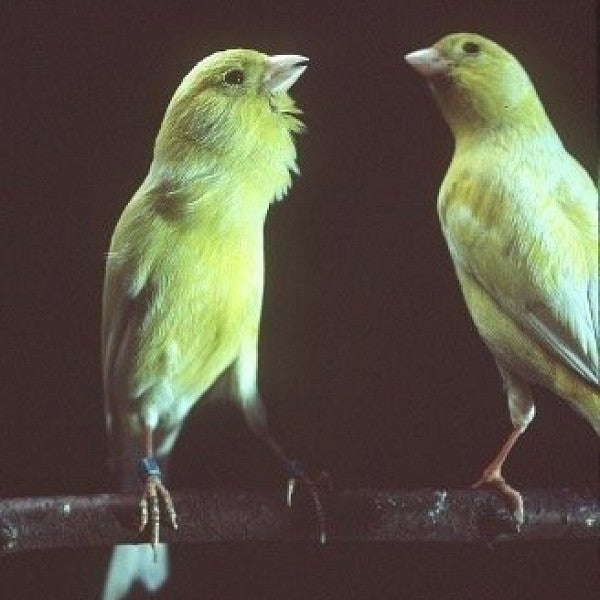
This project examines how the brain produces flexible behavioral sequences. The project focuses on the relationship between motor control pathways of the cortex and basal ganglia, a region of the brain implicated in multiple human movement disorders.
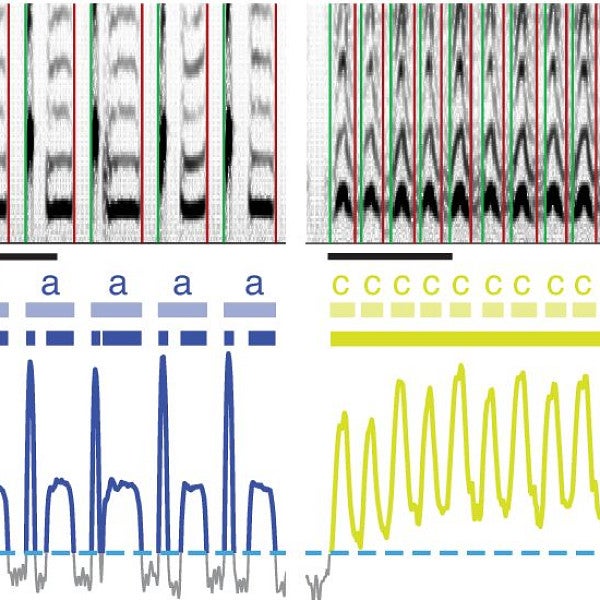
In the study of canary song, we employ miniature fluorescence microscopes, neuropixel arrays, and machine learning methods to analyze behavior and brain data.
Active Project
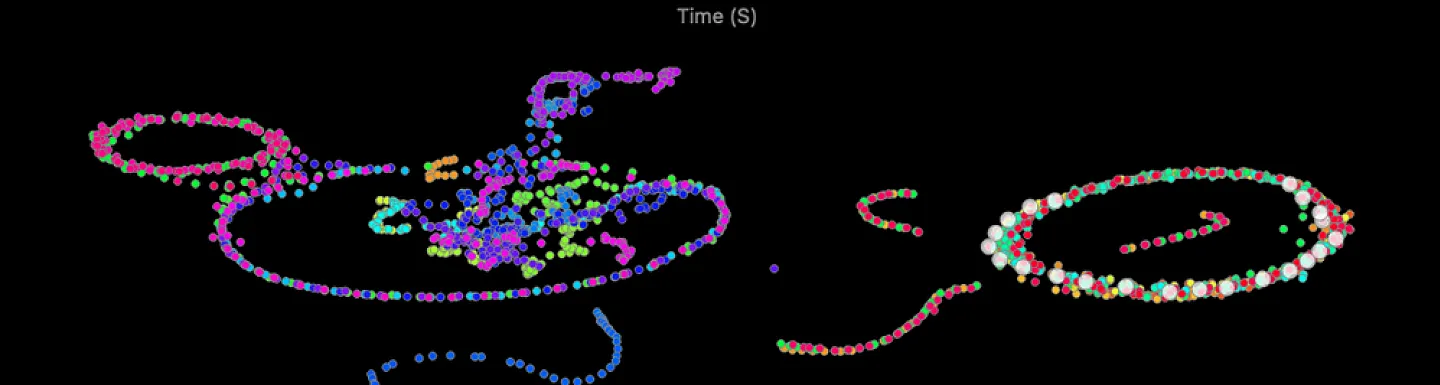
Self-supervised learning for audio and neural data
Self-supervised learning enables deep neural networks to learn meaningful representations from large quantities of unlabeled data. The key idea behind the technique is to design an auxiliary task, also known as a pre-training task, which challenges the model to learn high-level properties of the data. Once the model has been pre-trained using the auxiliary task, the internal representations of the model can be used for downstream signal processing tasks through supervised fine-tuning. The internal representations of the model can also be used as an excellent basis for automatic clustering of animal vocalizations. We are working to develop self-supervised models to analyze the songs of canaries, juvenile zebra finches, and parrots.
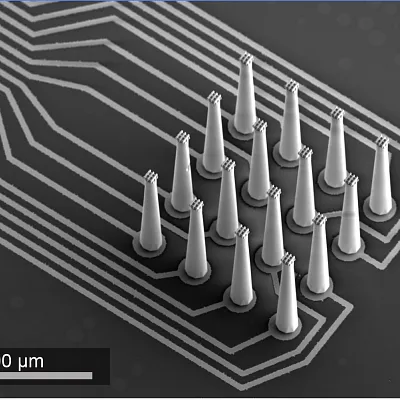
This project developed a 3D microelectrode array integrated on a thin-film flexible cable for neural recording in small animals. The fabrication process combines traditional silicon thin-film processing techniques and direct laser writing of 3D structures at micron resolution via two-photon lithography. Devices include 90 µm pitch arrays, biomimetic mosquito needles that penetrate through the dura of birds, porous electrodes with enhanced surface area, and electrodes integrated in nerve cuffs for peripheral nerve recording. Applications include small animal models, nerve interfaces, retinal implants, and other devices requiring compact, high-density 3D electrodes… Ongoing work is focused on reducing the electrode thickness, increasing density, enhancing sharpness, and increasing channel count.
Completed Project
Nerve interfaces
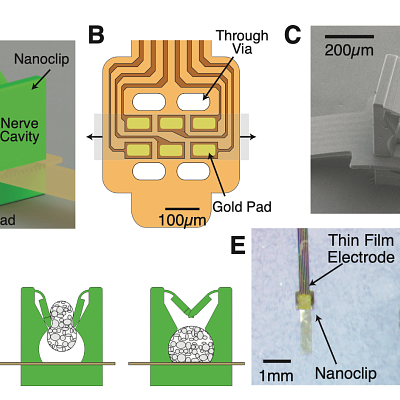
The field of bioelectronic medicine seeks to decode and modulate peripheral nervous system signals to obtain therapeutic control of targeted end organs and effectors. Current approaches rely heavily on electrode-based devices, but size scalability, material and microfabrication challenges, limited surgical accessibility, and the biomechanically dynamic implantation environment are significant impediments to developing and deploying peripheral interfacing technologies. This project develops a microscale implantable device – the nanoclip – for chronic interfacing with fine peripheral nerves in small animal models that begins to meet these constraints. The device is capable to make stable, high signal-to-noise ratio recordings of behaviorally-linked nerve activity over multi-week timescales. In addition, we show that multi-channel, current-steering-based stimulation within the confines of the small device can achieve multi-dimensional control of a small nerve. Current work is seeking to enhance the signal to noise ratio of recordings through the addition of active electronics and penetrating spikes that can record inside the nerve.
Featured Publications
2026
TweetyBERT: Automated parsing of birdsong through self-supervised machine learning
In 2019, the Gardner Lab relocated to the University of Oregon's Phil and Penny Knight Campus for Accelerating Scientific Impact. Based in the Department of Bioengineering in Eugene, Oregon, the Gardner Lab explores the principles underlying learning and production of complex behaviors in biological neural networks.