
Principal Investigator
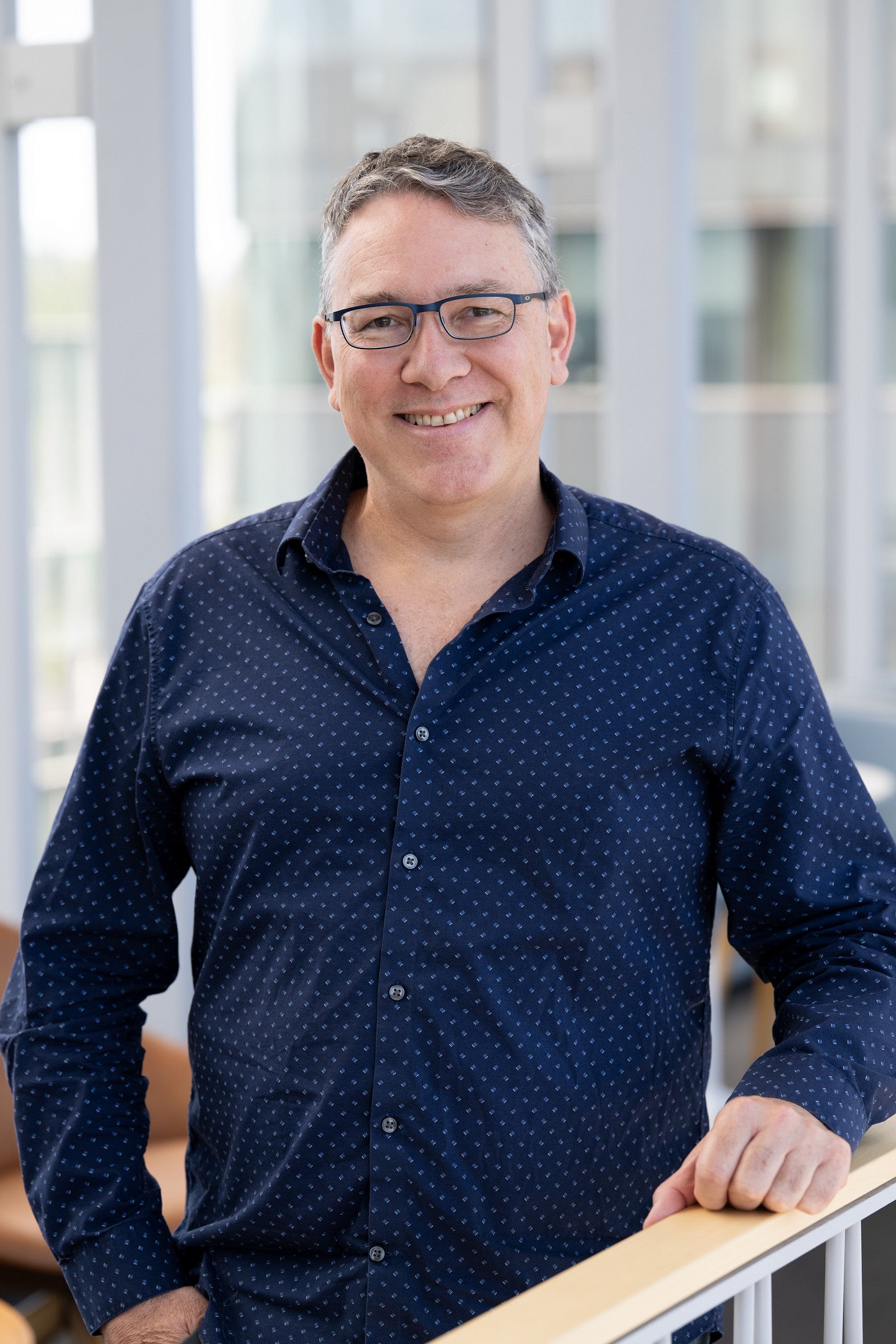
Paul Dalton
Associate Professor, Knight Campus
Bradshaw and Holzapfel Research Professor in Transformational Science and Mathematics
Phil and Penny Knight Campus for Accelerating Scientific Impact
Department of Bioengineering
Read more →
Originally a materials scientist, Paul Dalton has attained interdisciplinary experience in diverse aspects of advanced biomaterials and clinical device fabrication. He received his PhD from Curtin University in Perth, Australia, where he was part of a Lions Eye Institute team taking an artificial cornea from concept to the clinic. His first post-doc was at the University of Toronto, Canada, with Molly Shoichet developing hydrogels for nerve regeneration, while his second was conducted at Aachen University, Germany, with Martin Möller, applying nanotechnology to life science applications. Each position added a discipline to a materials science foundation, and each addressed the same underlying problem of how a synthetic material behaves once it is placed inside the body.
Later, as an independent research fellow at the University of Southampton in England, Paul investigated neuroinflammatory profiles of hydrogel scaffolds implanted in the spinal cord. Such implants are read by the immune system as much as by the tissue they are intended to repair, and that response often determines whether a device succeeds.
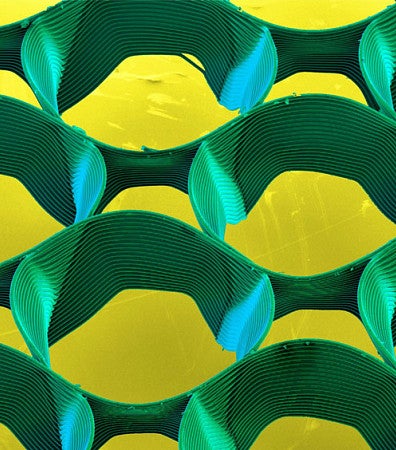
Between 2009 and 2011 he split his time between Shanghai Jiao Tong University in China and Queensland University of Technology in Australia to develop a new high resolution 3D printing technology, called melt electrowriting (MEW). In MEW, an electric field draws molten polymer into a fiber a few micrometers in diameter, which is then placed exactly where it is required, layer upon layer. The technique combines the fine fibers of electrospinning with the placement accuracy of 3D printing, producing ordered structures at a scale that individual cells recognize and respond to.
As the first Professor in Germany in Biofabrication, he established the first MEW printer in Europe and continued to pioneer the technique. Now at the Knight Campus at the University of Oregon, his experienced team will take MEW to another level of capability and control.
Lab Members

Join the Dalton Lab
Undergraduate Students
If interested in joining the Dalton lab for research, please contact Dr. Dalton with a short summary of the research you're interested in and your relevant experience. Undergraduate students interested in working in the lab should plan to commit to at least 1 full term of part-time research (8-12 hours/week) or 1 summer of full-time research (35-40 hours/week).
Graduate Students
Graduate students should apply to the University of Oregon bioengineering doctoral program as well as reach out to Dr. Dalton with a resume/CV. Students outside the bioengineering program should contact Dr. Dalton about potential rotation opportunities.
Postdoctoral Scholars
If interested in a postdoctoral scholar position in the Dalton lab, contact Dr. Dalton with CV, research interests, and contact information.
Dalton Lab Alumni
Postdoctoral Scholars
▼
Graduate Students
▼
Visiting Scholars
▼
Research Engineers and Research Assistants
▼
Undergraduate Researchers
▼