
A story featured on the Wu Tsai Human Performance Alliance news site, highlights Knight Campus research from the Willett Lab. The research examines achilles ruptures, some of the most common and stubborn tendon injuries — a year after injury, patients still fall well short of full recovery. In a rat study published in the Journal of Orthopaedic Research, a team led by Nick Willett, associate director of the Wu Tsai Human Performance Alliance at Oregon and associate professor of bioengineering at the Knight Campus, tracked fluid clearance from injured tendons using glowing dyes. Eight weeks after injury, the tendons drained lymphatic fluid more slowly than healthy tissue, and their material strength had not returned, even though gait, pain, and stiffness had largely recovered. The researchers say trapped fluid may keep the tissue stuck in an inflammatory state.
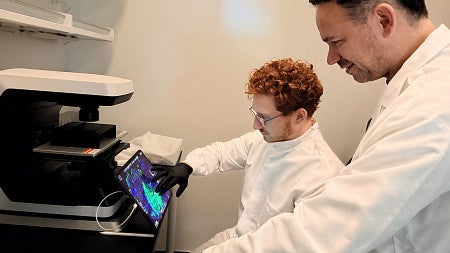
“When tissue is injured, it produces a constant stream of waste — tissue debris, dead cells, and other byproducts — that must be removed,” Willett said. “When that fluid clearance is impaired, waste can’t leave the environment.”
Researchers are now testing whether rehabilitation exercises can restore drainage in both rodents and humans.