
Strategic Plan
Created in 2019 and Updated in 2023
The Knight Campus embodies a new paradigm for pioneering scientific inquiry that accelerates the cycle of translating scientific discoveries into societal impact. Here's the plan that lays forth Knight Campus' mission and vision.
"There is no finish line. That is our motto. Let everyone else call your idea crazy…just keep going. Don't stop. Don't even think about stopping until you get there, and don't give much thought to where 'there' is. Whatever comes, just don't stop."
– Phil Knight
While this famous quote from Nike founder Phil Knight did not refer to scientific research, the spirit rings true and inspires us to keep striving to achieve more every day.
Mission and Vision
Knight Campus Strategic Plan
Foundational Characteristics of the Knight Campus
Inclusive
We embrace a culture of inclusivity to harness the power of diverse ideas and people.
Bold
We tackle the biggest challenges in health and life sciences, driven by an unrelenting desire to translate discovery into positive societal impact.
Creative
We discover new ways to solve problems using a convergent science approach at the interface of traditional scientific disciplines.
Nimble
We rapidly adapt, pursuing new opportunities to meet societal needs and build on scientific and technical advances.
Collaborative
We cultivate a collegial, collaborative ecosystem and forge state, national, and international partnerships that support our mission.
Our Plan
About Our Strategic Plan
The Phil and Penny Knight Campus for Accelerating Scientific Impact is a bold new effort designed to accelerate the cycle of translating scientific discoveries into innovations that improve quality of life for people in Oregon, the nation, and beyond. Rooted in the University of Oregon's 60-year history of interdisciplinary collaboration, the Knight Campus will catalyze new research opportunities, forge partnerships with industrial and clinical practitioners, and provide integrated experiential training for the next generation of citizen scientists and entrepreneurs.
Our $1 billion vision to rethink research, innovation, and training was launched by a remarkable $500 million lead gift from Penny and Phil Knight and is further supported by $70 million in state bonds. A uniquely designed research and innovation building specific to our goals is being constructed on an accelerated timeline for opening in spring 2020 with the state support and gift funds.
This plan outlines a strategy and tactics to help achieve our vision over the next decade. It aims to build on the momentum of our current efforts to construct state-of-the-art facilities and recruit outstanding faculty, guiding our trajectory and growth for years to come. Like any good plan, it is a "living" document that Knight Campus leadership will revisit regularly, ensuring our strategic priorities and tactics remain relevant and aligned with our vision.
The Knight Campus strategic plan is informed by input from stakeholders from within the University of Oregon and external parties who serve as valued Knight Campus partners or advisors. Stakeholders provided input through interviews and multiple workshops conducted in 2018. Nexight Group provided facilitation, strategic planning, writing, and design support.
In January 2023, the Knight Campus strategic plan was revised with significant input from the Knight Campus Inclusion, Diversity and Outreach Committee. Our commitment to these principles is intended to be infused throughout every activity we engage in. Cultivating a Diverse and Inclusive Community is not only a standalone strategic priority of the Knight Campus, but one that informs every other priority we are centered on. The revisions better reflect this goal.
Our Framework
Knight Campus Strategy Overview
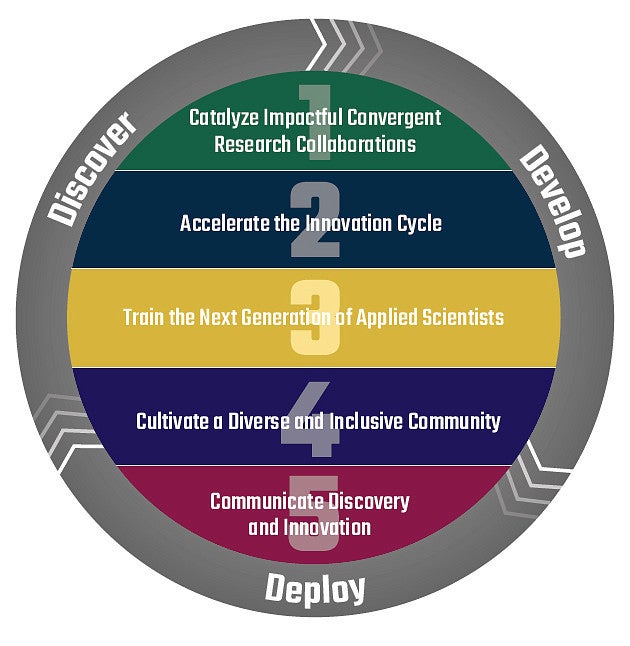
The Knight Campus strategy is centered on five priorities that must be integrated in all activities to successfully execute our mission:
Catalyze Impactful Convergent Research Collaborations
We will identify solutions to societal needs through a bioengineering and applied science research strategy driven by current challenges, a systems-based research approach, and translation that improves the human experience.
Accelerate the Innovation Cycle
We will serve as an innovation hub, building an integrated innovation and entrepreneurship (I&E) ecosystem, a physical Innovation Center, and industry and business partnerships to rapidly turn ideas into tools and technologies that address societal needs, with strong encouragement for innovation and entrepreneurship that engages disadvantaged populations.
Train the Next Generation of Applied Scientists
We will provide interdisciplinary, hands-on training that equips students, postdocs, and researchers with the skills to tackle real-world problems, offering experiential learning opportunities in both academia and industry, and courses and seminars that build entrepreneurial skillsets.
Cultivate a Diverse and Inclusive Community
We will build a community that thrives on diversity, empowering new insights and supporting people of all backgrounds. This ambition will guide broad decisions—such as physical space design, approaches taken in the classroom, and student/postdoc/faculty/staff recruitment and retention—as well as specific diversity and inclusion policies and procedures. We aim to infuse a culture of diversity and inclusion into all aspects of our work.
Communicate Discovery and Innovation
To increase visibility and support for the Knight Campus, we will build targeted communications strategies to engage internal and external stakeholders as well as empower researchers to communicate about their own work and its impact. We will be intentional about using inclusive language and methods in our communication strategies to reach audiences that have been historically overlooked or excluded in science and engineering.
To advance these priorities, the Knight Campus will create a nimble, world-class scientific enterprise defined by exceptional and collaborative faculty; dedication to translational science; strong partnerships at the regional, national, and international levels; state-of-the-art laboratories and shared facilities; and outstanding students and support staff. Ultimately, our integrated approach to research, innovation, and training will accelerate the cycle of discovery, development, and deployment. We will position ourselves at the intersection of science and society, ensuring our work translates to solutions for the greater good.
Strategic Priority 1: Catalyze Impactful Convergent Research Collaborations
Strategic Priority 1
Catalyze Impactful Convergent Research Collaborations
Advancing research that can translate into impactful innovations requires collaboration across traditional disciplinary boundaries. To launch this research, the Knight Campus will create an ecosystem that fosters the convergence of diverse capabilities, technologies, and ideas. Through the establishment of a diverse and collaborative research environment, the Knight Campus will be positioned to identify and address historically unjust practices and societal inequities.
Interdisciplinary teams in defined research focus areas will be co-located in spaces designed to promote frequent interactions and regular collaboration. These relatively small teams of faculty and students will operate within a culture that values translation and will connect to services and programs designed to help them efficiently realize real-world impact in the state of Oregon and beyond.
Research Areas
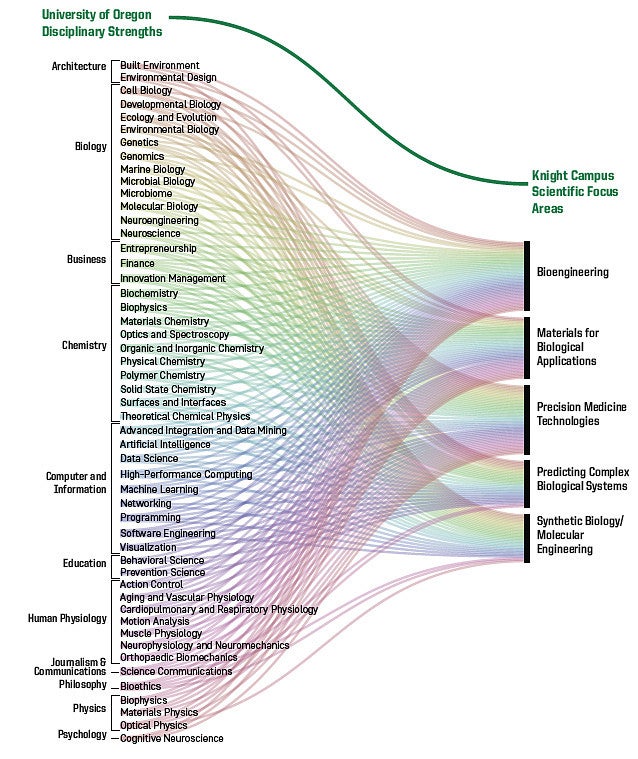
5 Scientific Focus Areas
The Knight Campus will pursue research opportunities that leverage our capabilities and allow for impact-driven translation. Our research focus areas will remain flexible to allow us to respond to changing needs, and tackle societal disparities and social inequities. On an ongoing basis, we will prioritize our research focus areas using the following criteria:
- Leverages and connects with existing strengths at the University of Oregon
- Aligns with current and/or projected federal funding priorities
- Synergizes with statewide partner priorities
- Has strong translational potential for economic and societal impact
- Requires interdisciplinary collaboration to develop creative solutions
Based on these criteria and input gathered from stakeholders through numerous interviews and workshops, the following scientific focus areas will guide Knight Campus faculty searches and research priorities for our initial five years. These areas are not mutually exclusive; recruited faculty may have expertise in multiple areas, providing additional opportunities for interdisciplinary research and translation. In addition, the timing and extent of faculty recruitment in each area will be based on opportunities to recruit outstanding individuals, educational program needs, and ongoing input from Knight Campus faculty. As a result, investment and hiring is not expected to be equal across the five areas.
Bioengineering
A broad multidisciplinary field that combines biology and engineering to address questions in life sciences and develop solutions to unmet needs in medicine and healthcare. Initial Knight Campus activities will prioritize neuroengineering and musculoskeletal engineering.
Materials for Biological Applications
Biomaterials made of natural or synthetic components designed to integrate and interact with biological systems, including the human body. Recent advances include nanoscale biomaterials, 3D printing, biofunctionalized surfaces, and biosensors.
Precision Medicine Technologies
Development of preventative approaches or treatments tailored to subpopulations of patients based on cellular or molecular biomarkers and/or genetic, lifestyle, or environmental factors. Includes targeted immunotherapies, pharmacogenomics, and microbiome engineering.
Predicting Complex Biological Systems
Applying computational technologies such as artificial intelligence, machine learning, multivariate statistical modeling, and bioinformatics to better understand and predict the effects of complex factors on human health.
Synthetic Biology / Molecular Engineering
Through rapid advances in cellular and biochemical technologies, synthetic biology is enabling massive DNA synthesis and editing. Life science applications include therapeutics to cure genetic diseases, DNA bar coding, protein engineering, and biosensors.
Action Plan
Tactics: Catalyze Impactful Convergent Research Collaborations
Tactics that the Knight Campus will adopt to achieve this strategic priority are detailed in the following table.
Activity | Near | Long |
|---|---|---|
Establish and Maintain Internal Activities and Programs | ||
Create a financial model to reward faculty who successfully compete for extramural research funding | ✔️ | |
Create a Knight Scholars Undergraduate Research Program | ✔️ | |
Establish world-class core facilities that enable Knight Campus faculty to compete more effectively for federal grants and attract industry-sponsored research funding | ✔️ | ✔️ |
Using active recruiting practices to enhance diverse candidate pools. Recruit world-class, tenure-related faculty in the scientific focus areas | ✔️ | ✔️ |
Hire an outstanding staff team dedicated to supporting the Knight Campus research mission | ✔️ | ✔️ |
Develop and implement seed grant programs to catalyze convergent collaborations | ✔️ | ✔️ |
Conduct an annual review of scientific focus areas | ✔️ | ✔️ |
Leverage and Build External Relationships | ||
Initiate and develop collaborative inter-institutional partnerships in support of innovative research programs that leverage institutional strengths | ✔️ | ✔️ |
Develop a robust philanthropic campaign in support of Knight Campus research | ✔️ | ✔️ |
Pursue and maintain a strong, diverse network of industrial partners that support research, students, and programming objectives | ✔️ | ✔️ |
Strategic Priority 2: Accelerate the Innovation Cycle
Strategic Priority 2
Accelerate the Innovation Cycle
Innovation and entrepreneurship (I&E) will drive Knight Campus research toward societal impact. To encourage Knight Campus researchers and students to stretch beyond traditional academic boundaries, we will define and cultivate principles of an innovative, entrepreneurial culture—including resilience through failure, collaboration, diversity, responsiveness, and creativity.
We will implement policies and practices that aim to dismantle structural barriers, and thus increase opportunity for groups traditionally marginalized within innovation. For example, the Knight Campus will provide access to incubator space and costly infrastructure through the core facilities, designing pricing structures to help derisk early startup activity by reducing researcher's capital requirements.
The Knight Campus is committed to practices that encourage and promote participation by minority, women-owned, and emerging small businesses (MWESB), and will conduct targeted outreach efforts aimed at increasing opportunities for these businesses.
Key Initiatives
In Our First Five Years
Foster an Integrated Innovation and Entrepreneurship Ecosystem
The Knight Campus will establish I&E as a cornerstone of our strategy by defining expectations and formally assessing and incentivizing student, postdoc, and faculty I&E activity. Knight Campus students will be required, and early career researchers will have opportunities, to engage in specialized workshops and training and will have access to elective higher-level programming to pursue further I&E interests and research needs. For faculty, activities to develop new products and launch new ventures will be considered in hiring, promotion, and tenure decisions.
Establish and Support an Innovation Center
Within Building 1 and 2, the Knight campus is devoting approximately 10,000 square feet to an Innovation Center that will include both wet labs and larger enclosed lab spaces. These spaces will be available for rent, with benches suitable for individuals or small teams and the larger lab spaces for early-stage ventures from within or outside the university. More established businesses may lease wet lab space as well as co-working desk space, both of which offer access to meeting rooms and collaboration hubs. The Innovation Center will be further supported by an in-center regulatory consultant and in-house Knight Campus business development services to help with technology transfer, legal counsel, and sponsored research administration.
Actively Engage Business and Industry
The Knight Campus will establish and maintain partnerships with local, regional, and national businesses to help translate our research and innovations into societal impact. To encourage and sustain these external partnerships, it will be critical to enhance the University of Oregon's reputation as a valuable partner. Our leadership will implement policies and procedures to make partnering with the Knight Campus easy and worthwhile, removing structural barriers and engaging in outreach to increase opportunities for Emerging Small Business (ESB), Minority/Woman Business Enterprise (M/WBE), Service Disabled Veteran (SDV) and Disadvantaged Business Enterprise (DBE and ACDBE). We will work with central university professionals to build industry support for Knight Campus research, education, internships, and programming.
Action Plan
Tactics: Accelerate the Innovation Cycle
Tactics that the Knight Campus will adopt to achieve this strategic priority are detailed in the following table.
Activity | Near | Long |
|---|---|---|
Foster an Integrated Innovation and Entrepreneurship Ecosystem | ||
Establish and maintain an I&E speaker series. Seeking diverse members of the research and business community to draw in underrepresented groups | ✔️ | ✔️ |
Establish and implement promotion, tenure, and evaluation criteria to account for innovation, entrepreneurship, and societal impact | ✔️ | ✔️ |
Incorporate I&E into all degree programs through a mix of mandatory and elective courses, workshops, and programming | ✔️ | ✔️ |
Develop programming, including financial support mechanisms, to facilitate faculty, postdoc, and student participation in innovation activities | ✔️ | ✔️ |
Establish and Support an Innovation Center | ||
Design and establish a physical space within the Knight Campus with leasable wet lab and office space | ✔️ | ✔️ |
Provide in-house support—including tech transfer; business development; regulatory affairs; sponsored research; and environment, health, and safety compliance—for tenants of the Innovation Center and Knight Campus faculty, staff, and students and postdocs | ✔️ | ✔️ |
Establish working relationships with local and regional economic-development entities | ✔️ | ✔️ |
Identify novel funding mechanisms to support entrepreneurial activity | ✔️ | |
Create an entrepreneur-in-residence program and/or mentorship programs for Innovation Center tenants and the Knight Campus community, seeking mentors from diverse backgrounds with an emphasis on those underrepresented in entrepreneurial and biomedical research activities | ✔️ | |
Actively Engage Business and Industry | ||
Develop and establish policies, procedures, and processes that reduce barriers to academia-industry collaboration | ✔️ | |
Place students in funded internships with startups and established industry partners | ✔️ | ✔️ |
Incentivize faculty to work on industry-relevant problems through paid sabbaticals or through appointments with companies or in clinical settings | ✔️ | |
Identify entrepreneurial mentors to support faculty, and develop industry-relevant courses, seminars, and internships | ✔️ | |
Establish an industrial affiliates program | ✔️ | |
Strategic Priority 3: Train the Next Generation of Applied Scientists
Strategic Priority 3
Train the Next Generation of Applied Scientists
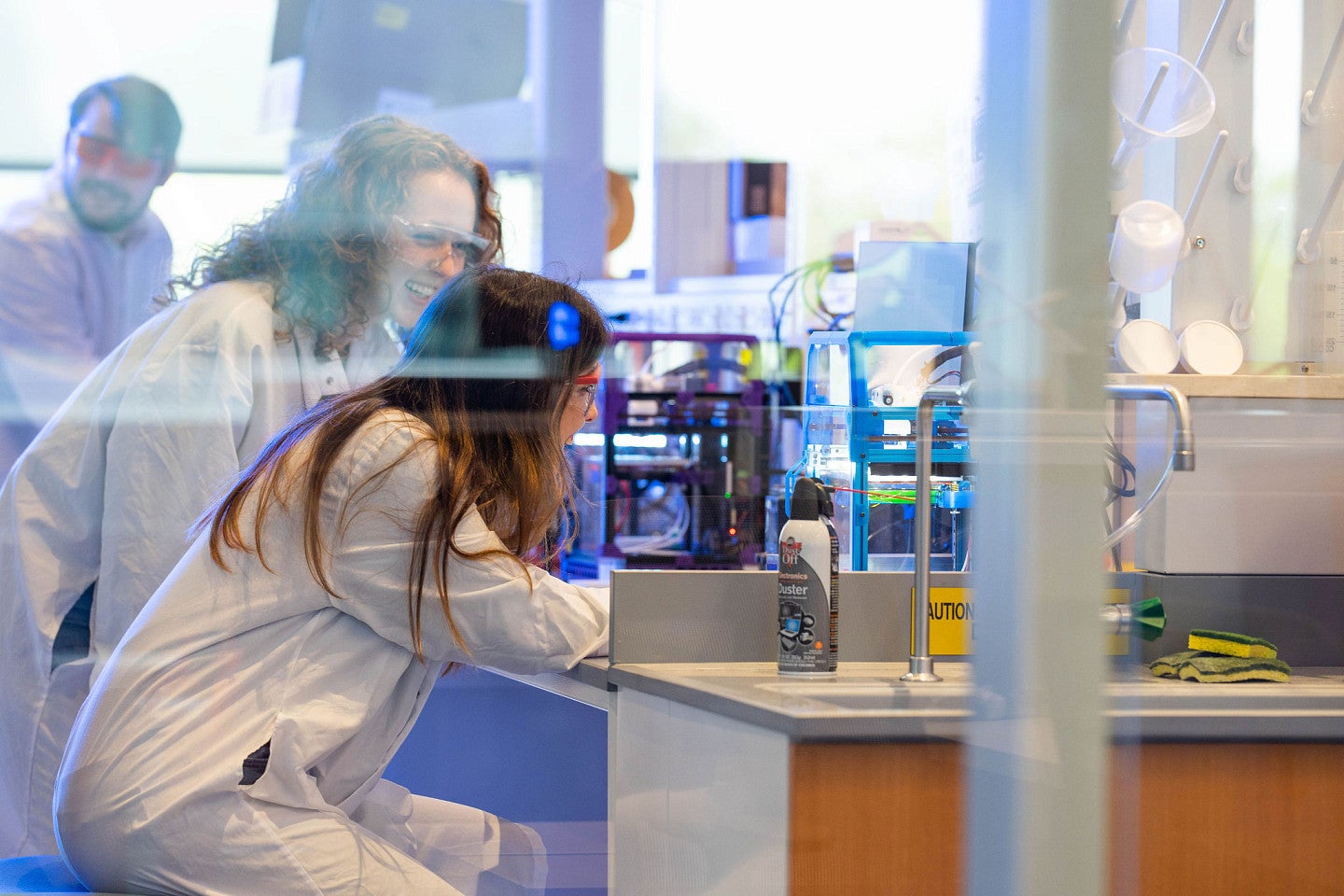
The Knight Campus will develop and support innovative education models to produce students highly competent in research, translation, and communication. By implementing a training strategy that is interdisciplinary, experiential, applied, and entrepreneurial, we will prepare students to identify and solve problems of societal and commercial relevance.
Students and postdocs will engage with faculty mentors in authentic and meaningful research, learn to effectively communicate the societal impact of their work, assess the ethical considerations of research and technology for a diverse population, and capitalize on opportunities to apply and build on their training.
Training Pillars
In Our First Five Years
Re-envision the Training Process
At the Knight Campus, we will prioritize mentored, immersive education—pioneered through the Knight Campus Graduate Internship Program—and will define training content, format, and duration based on robust learning outcomes and "backward design." Although we will offer some traditional classroom and laboratory training, our core training activities will be designed to provide the right amount of training when it is needed most. For example, workshops, ranging from a single hour to weekly meetings for several months, may replace traditional quarter-long courses.
Build Technical and Interdisciplinary Research Capacity
We will leverage our faculty expertise, research programs, and core facilities to equip students and postdocs with skills that are widely applicable across fields and research contexts. In addition to developing state-of-the-art technical skills to conduct ethical research, measure, analyze, and problem solve, we will help students and postdocs build soft skills needed to thrive in interdisciplinary environments. Our students and postdocs will develop the resilience and grit to succeed in challenging projects and the nimbleness to identify innovative solutions. They will also learn to expertly harness team capabilities and resources, effectively communicate, and efficiently collaborate to maximize the impact of their work.
Provide Targeted Innovation and Communications Training
We must learn to look beyond the lab to identify and examine problems that are important to society and industry. To help students and postdocs acquire this skill critical to accelerating impact, the Knight Campus will provide them with opportunities to engage in the process of translating discoveries from lab to market. Additionally, we will create immersive learning environments where students and postdocs will practice proactively assessing ethical considerations of research and technology and communicating the important impacts of their research to a broad range of audiences—from their peers to the general public.
Tailor Professional Development to Advance Excellence
The Knight Campus will ensure our students, postdocs, staff, and faculty are well-positioned to achieve their short- and long-term professional goals. We will offer robust career planning and professional development programs to prepare students and postdocs to become scientific leaders, alongside programs that help all Knight Campus participants excel as individuals and in teams to accelerate our scientific impact. Our professional development begins with welcoming the diverse stakeholders that make up the fabric of a scientific community and provides an enriched training program within world-class facilities.
Action Plan
Tactics: Train the Next Generation of Applied Scientists
Tactics that the Knight Campus will adopt to achieve this strategic priority are detailed in the following table.
Activity | Near | Long |
|---|---|---|
Re-envision the Training Process | ||
Apply learning outcomes, backward design, and robust evaluation approaches to establish and continuously improve cutting-edge Knight Campus training programs | ✔️ | |
Develop workshops and other training formats that can quickly address knowledge gaps as they arise | ✔️ | |
Develop and expand an experiential applied graduate training program based on the Knight Campus Graduate Internship Program model | ✔️ | |
Build Technical and Interdisciplinary Research Capacity | ||
Facilitate immersive, first-year research rotations where students gain hands-on experience in interdisciplinary research programs, as well as expertise in a variety of experimental approaches and techniques | ✔️ | |
Create coordinated graduate education opportunities in biomedical engineering with statewide partners | ✔️ | |
Develop and deliver technical courses and workshops on experimental design, measurement, data analysis, and problem solving | ✔️ | |
Provide Targeted Innovation and Communications Training | ||
Offer workshops and trainings (e.g., Lens of the Market) that help students and postdocs identify applied research problems that are important to society | ✔️ | |
Encourage students and postdocs to gain exposure to real-world problems through internships or by participating in off-site collaborative research | ✔️ | |
Provide training to enhance peer-to-peer scientific communication in the form of oral and poster presentations, research articles, and research proposals | ✔️ | |
Facilitate visits and seminar presentations by successful entrepreneurs and innovators | ✔️ | |
Offer training that promotes proactive assessment of ethical considerations and effective communication about the nature and impact of Knight Campus research to the public | ✔️ | |
Tailor Professional Development to Advance Excellence | ||
Actively engage students and postdocs in career planning from the beginning of their studies | ✔️ | ✔️ |
Provide comprehensive professional development training opportunities for students and postdocs to build less tangible skills such as grit, resilience, nimbleness, and innovative problem solving | ✔️ | |
Offer workshops to help the Knight Campus community communicate within scientific teams to more effectively leverage team strengths and advance excellence | ✔️ | |
Strategic Priority 4: Cultivate a Diverse and Inclusive Community
Strategic Priority 4
Cultivate a Diverse and Inclusive Community
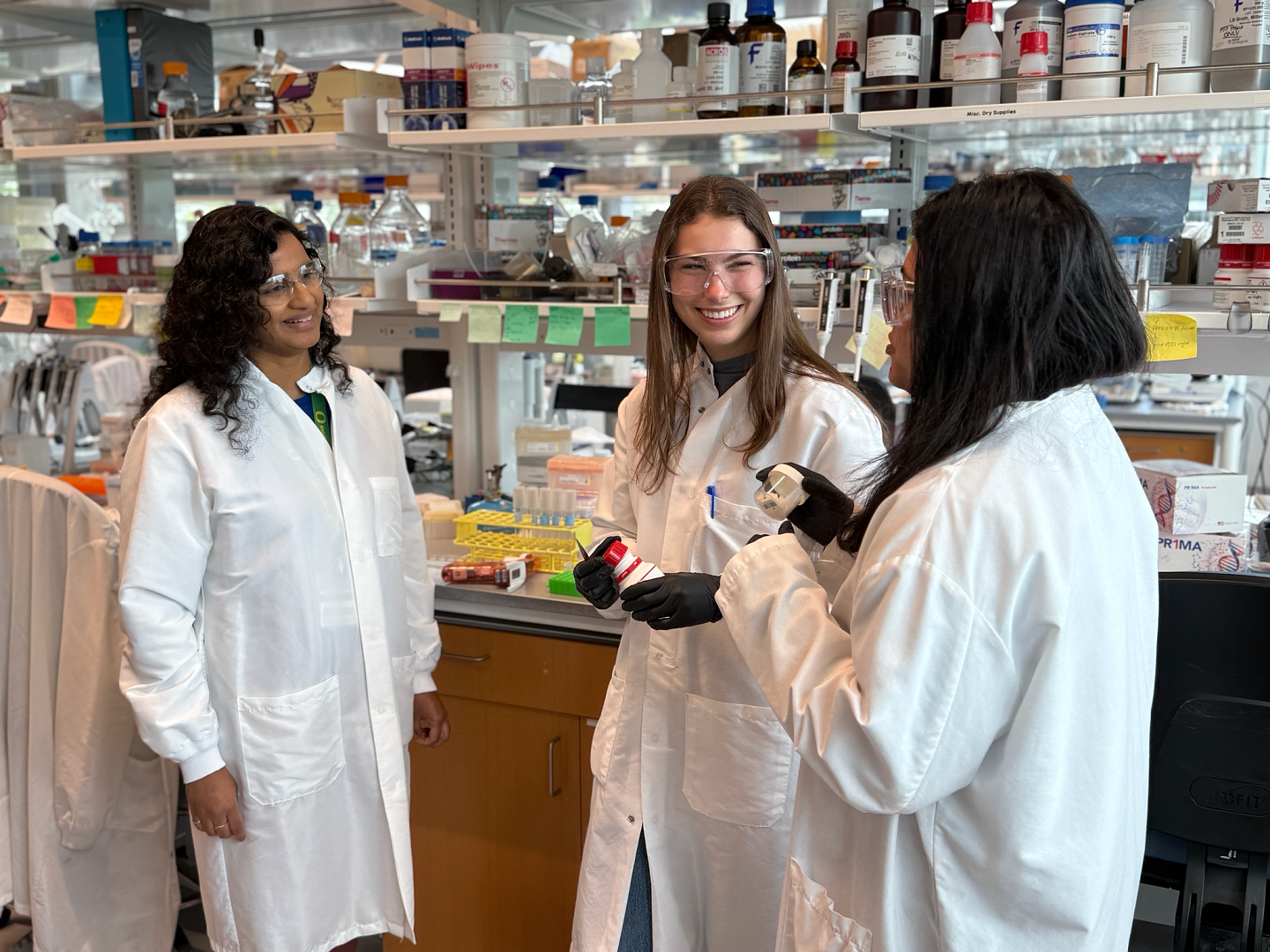
The Knight Campus will build a community that thrives on diversity, empowering new insights and supporting people of all backgrounds. This ambition will guide broad decisions - such as physical space design, approaches taken in the classroom, and student/faculty recruitment and retention - as well as specific diversity and inclusion into all aspects of our work. The most impactful science is driven by diverse perspectives and talents working together on discovery and experimentation, in teams where all members feel valued and supported.
The first Knight Campus building is designed for universal access, informed by focus groups that helped define key access considerations for as broad a segment of society as possible. We will continue this focus on universal access in the design of the second building. Our human resource team will also continuously evaluate and recommend programs to accommodate a growing staff and student base. We will leverage existing affinity groups at the University of Oregon, share information about these groups with our students, postdocs, faculty, and staff, and encourage building upon these initiatives.
Four Diversity Goals
Our Commitment to Diversity and Inclusion
Create an Inclusive and Welcoming Environment for All
The first Knight Campus building is designed for universal access, informed by focus groups that helped define key access considerations for as broad a segment of society as possible. We will continue to focus on universal access in the design of the second building. To nurture a community unhindered by historical boundaries, we have also drafted unit policies and processes focused on respect and inclusivity—encompassing race, ethnicity, disability, thought, culture, religion, sexual orientation, gender, and economics.
Increase Diversity in the Knight Campus Community
The Knight Campus seeks to strengthen diversity as we hire new exceptional faculty and staff, recruit talented students and postdocs, and build meaningful external partnerships. We will actively recruit from underrepresented communities; pursue partnerships with Minority, Women, and Small Business Enterprises; and work with our Inclusion, Diversity, and Outreach faculty committee to continuously assess and recommend ways to further improve our diversity initiatives.
Facilitate Access to Achievement
We are committed to ensuring that students, faculty, staff, and alumni from underrepresented communities can succeed in their work and are recognized for their achievements. To do so, we will launch programs focused on retaining students and postdocs from underrepresented communities, provide targeted professional development support, and offer financial support to encourage innovative projects. Our human resource team will also continuously evaluate and recommend programs to accommodate a growing staff and student base. We will leverage existing affinity groups for students, postdocs, faculty, and staff at the University of Oregon, share information about these groups, and encourage building upon these initiatives.
Leadership Publicly and Consistently Prioritizes Diversity and Inclusion
We will quickly implement recommendations generated by the Inclusion, Diversity, and Outreach committee to build an infrastructure and culture that welcomes all people—from across the nation and around the world. By accounting for diverse preferences in our programs, we will create an environment that supports and celebrates science and creativity in its broadest dimensions. We will continue engagement activities such as listening sessions with the community to make sure diversity and inclusion remains a focus at the Knight Campus. We will provide resources and training for hiring teams to stay up-to-date on best practices for recruiting and retaining faculty, staff, and students from diverse groups.
Action Plan
Tactics: Cultivate a Diverse and Inclusive Community
Tactics that the Knight Campus will adopt to achieve this strategic priority are detailed in the following table.
Activity | Near | Long |
|---|---|---|
Create an Inclusive and Welcoming Environment for All | ||
Develop a mission statement and a set of goals that prioritize diversity, outreach, and inclusion | ✔️ | |
Create physical spaces that are welcoming and mindful of universal design concepts | ✔️ | |
Develop unit policies and procedures that consider diversity, outreach, and inclusion | ✔️ | ✔️ |
Empower faculty/staff/postdocs/student committees to recommend ways to improve diversity, outreach, and inclusion | ✔️ | ✔️ |
Increase Diversity in the Knight Campus Community | ||
Employ ongoing recruiting practices that are mindful of and actively promote diversity and inclusion | ✔️ | |
Develop Human Resource policies, procedures, and practices that are mindful of diversity, outreach, equity, and inclusion | ✔️ | |
Offer programs and encourage participation in workshops and trainings on topics relevant to diversity and inclusion | ✔️ | ✔️ |
Facilitate Access to Achievement | ||
Develop policies, programs, and practices—emphasizing diversity and inclusion—for retaining researchers, staff, and students | ✔️ | |
Initiate a leadership development program for women and others from underrepresented groups interested in a career trajectory in management and leadership positions | ✔️ | |
Require all Knight Campus graduate students to engage in professional development focused on success in and beyond academia | ✔️ | |
Leadership Publicly and Consistently Prioritizes Diversity and Inclusion | ||
Continue support for student programming in STEM for those underrepresented in the sciences | ✔️ | ✔️ |
Build flexibility into programs as aligned with the needs of underrepresented groups—to encourage broader participation in the sciences | ✔️ | ✔️ |
Assess and aim to achieve a balance of interests when forming committees and work groups | ✔️ | ✔️ |
Include a focus on diversity and equity in fundraising efforts | ✔️ | ✔️ |
Strategic Priority 5: Communicate Discovery and Innovation
Strategic Priority 5
Communicate Discovery and Innovation
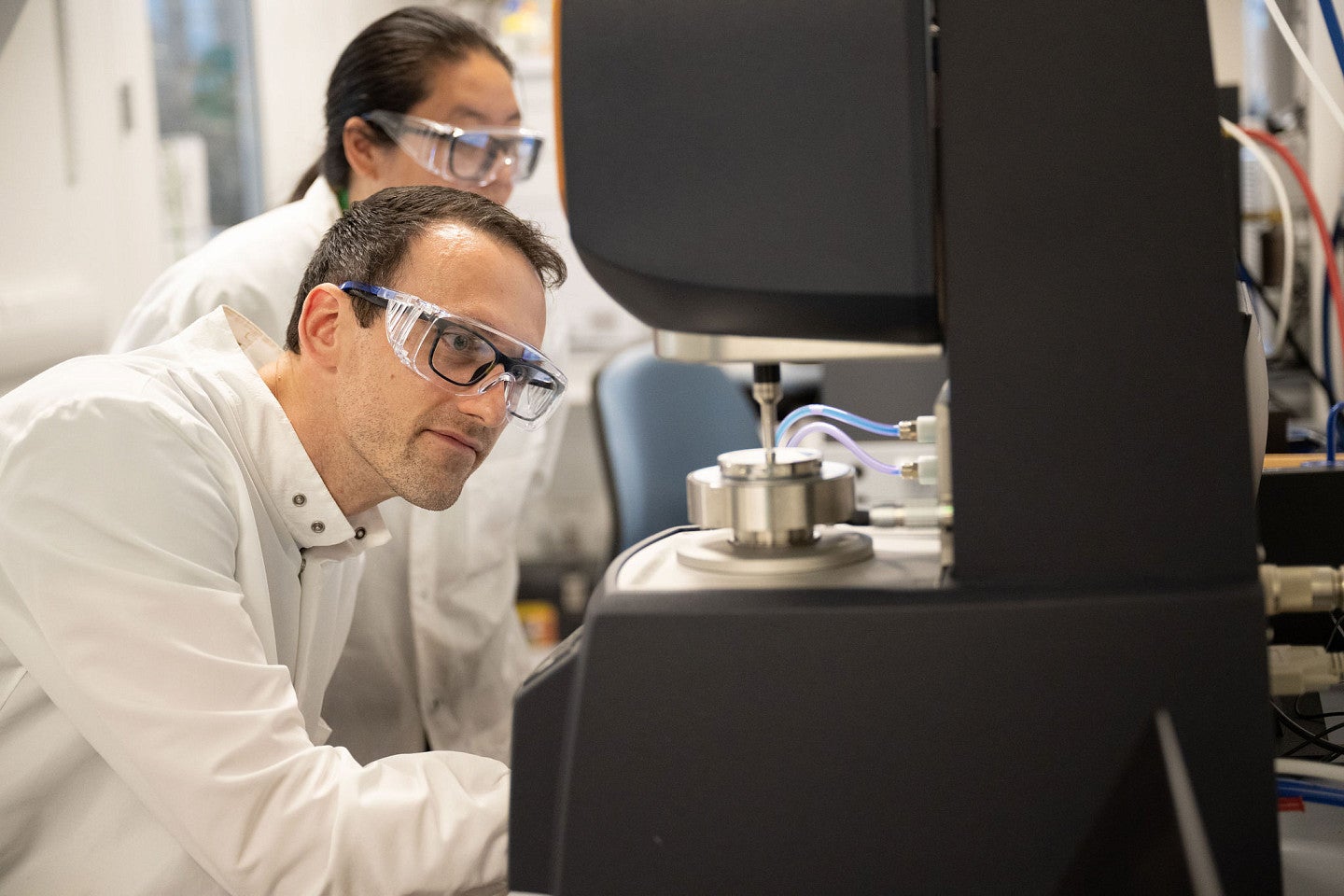
The communications landscape is changing, demanding comprehensive communications strategies that leverage both traditional and modern communications channels, including social media, to disseminate content and foster dialogue between researchers and various stakeholder groups. The Knight Campus will widely and creatively communicate about our work—by training researchers to be communications-savvy, gaining skills and tools needed to connect with many audiences—to effectively demonstrate our impact to both the scientific community and the public.
Our communications strategy will establish the University of Oregon as a hub for translation and applied research, showcasing Knight Campus efforts to catalyze impactful research, engage industry, train the next generation of applied scientists, launch new companies, reach out to a broad and diverse audience, and ultimately improve quality of life across society.
Key Initiatives
In Our First Five Years
Provide Science Communications Training
Researchers must be able to clearly and compellingly write and speak about the complexities of their work in scientific journal publications, proposals, and presentations, as well as to K-12 classrooms, legislative subcommittees, and venture capitalists. The Knight Campus will partner with the University of Oregon School of Journalism and Communication's Media Center for Science and Technology to create student and faculty training programs—both elective and compulsory—that teach evidence-based communications strategies using industry-leading technologies. The programs will equip researchers at all levels with the skills needed to communicate effectively with both peers and general audiences. We will refine our programs over time to develop a novel model for science communications training that is scalable to other institutions and applications, ultimately building a nationally recognized approach.
Identify and Target Internal Knight Campus and UO Audiences
Maximizing our impact requires frequent and clear communication with internal Knight Campus and University of Oregon audiences—including faculty, postdocs, staff, and students—to ensure their continued engagement and to facilitate sharing of ideas and lessons learned. We will keep these internal stakeholder groups tuned into Knight Campus activities through targeted email updates and e-newsletters, detailed web content, and videos. These communications will promote reliable and timely understanding of Knight Campus research and programming, and highlight and encourage participation in training and collaboration opportunities.
Implement Communications Strategy to Engage External Stakeholders
To showcase the diverse and vibrant community of the Knight Campus, and the impact and societal benefit of Knight Campus initiatives, we will leverage diverse communications tactics—including public events, external media placements, print advertising, web content, videos, email campaigns, and social media—to target specific audiences with tailored messaging and storytelling. Using these communications approaches, we will work to magnify our presence and quickly build national recognition.
Action Plan
Tactics: Communicate Discovery and Innovation
Tactics that the Knight Campus will adopt to achieve this strategic priority are detailed in the following table.
Activity | Near | Long |
|---|---|---|
Provide Science Communications Training | ||
Develop and regularly offer standard courses/workshops to faculty and staff on communicating scientific impact to non-scientists | ✔️ | ✔️ |
Create standard courses/workshops on effective science communication for proposals, publications, program officer relationship building, conference presentations, lab meetings, etc. | ✔️ | ✔️ |
Partner with other units on campus to provide writing and verbal communications training for science students across campus | ✔️ | ✔️ |
Provide low-risk, experiential opportunities for students, postdocs, and faculty to practice communication skills | ✔️ | |
Identify and Target Internal Knight Campus and UO Audiences | ||
Establish a routine reporting mechanism on the impact of communications actions | ✔️ | |
Partner with the executive leadership team to build an internal communications calendar, identifying the stakeholders, purpose, and timing of specific messaging to highlight opportunities for training, engagement, and collaboration | ✔️ | ✔️ |
Develop standard presentation decks and messaging material with an automatic refresh schedule for use by Knight Campus faculty, staff, and associates | ✔️ | ✔️ |
Implement Communications Strategy to Engage External Stakeholders | ||
Partner with enrollment management and graduate programs to develop a plan for Knight Campus student recruitment | ✔️ | |
Advertise and place earned media in national press, target sponsorships at national events (e.g., professional conferences, recruiting fairs), and identify other tactics to raise the national profile of the Knight Campus | ✔️ | ✔️ |
Engage the Knight Campus executive team and faculty to develop a marketing plan to recruit world-class, tenure-related faculty and staff | ✔️ | ✔️ |
Work with the University of Oregon central communications and advancement to develop strategic three-year plan that showcases the Knight Campus and the University of Oregon to donors, foundations, and other external funders | ✔️ | ✔️ |
Create an overall external communications plan, with an emphasis on quickly and easily tailoring messages to specific audiences | ✔️ | ✔️ |
Looking Ahead
Conclusion
We will achieve our mission of science advancing society through programs, facilities, resources, and people dedicated to accelerating the impact cycle of scientific discovery.
Faculty, students, postdocs, and staff will work together with the freedom to take risks, pursue "crazy ideas," and tackle big problems.
The Knight Campus will push the frontiers of science—reflecting a true Oregon pioneering spirit—using a systems approach to identify the origins of disease/dysfunction and develop new technologies that improve the human condition.
Everything the Knight Campus does will be imbued by our foundational characteristics as an inclusive, bold, creative, nimble, and collaborative enterprise.
With these guiding principles, we will forge ahead to train the next generation of socially engaged scientists and entrepreneurs, define currently unimagined industries, and translate scientific discoveries into lasting societal impact.
We won't stop.
Explore the Knight Campus
Discover programs designed to accelerate scientific impact—from doctoral research to applied master's programs to hands-on innovation training for undergraduates.