
Molecular Sensors and Biotechnology
Solving Biotechnology Challenges
The Molecular Sensors and Biotechnology track is structured to provide students with 6-months of coursework and 9-months of paid full-time internship. Take part in immersive coursework that brings together organic chemistry, chemical biology, analytical chemistry, molecular sensing and imaging.
Molecular Sensors and Biotechnology
Solving Biotechnology Challenges
The Molecular Sensors and Biotechnology track is structured to provide students with 6-months of coursework and 9-months of paid full-time internship. Take part in immersive coursework that brings together organic chemistry, chemical biology, analytical chemistry, molecular sensing and imaging.
What are molecular sensors?
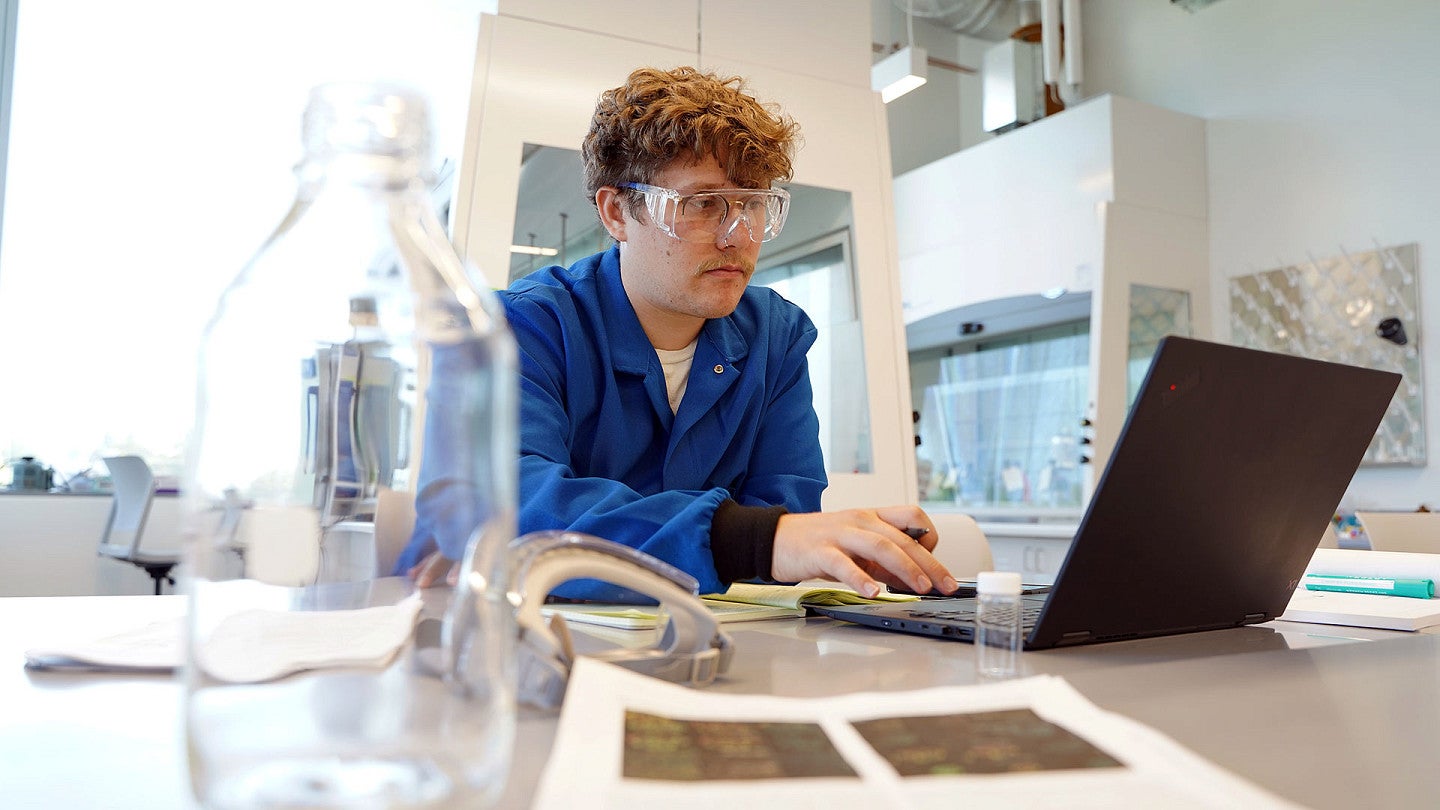
Molecular sensors are organic chemistry applied to biology and biotechnology. This interdisciplinary field comprises chemical biology, chemistry, imaging, and data analysis. Our playground is the lab bench and hood, and includes synthetic chemistry, compound characterization, developing sensors for biological imaging, and using chemical tools to solve biological problem
Possible Career Paths
Students who complete the molecular sensors and biotechnology track work in a wide variety of chemistry and engineering roles within the life sciences, biotechnology, pharmaceutical, fragrance and materials sectors as well as peripheral sectors. The track, launched in 2019, prepares alumni for a range of chemistry, engineering and management roles- all requiring technical knowledge, communication, teamwork and the ability to quickly learn new information.
- Pharmaceutical formulation
- Environmental sensing
- Cancer research
- Small molecule therapeutics
- Medical diagnostics
- Food science, cosmetics, and fragrance
Example Positions and Job Titles
Chemometrician / Sensor Data Scientist / Analytical Data Specialist
- Utilize design of experiments (DOE) and statistical methods to evaluate sensor-generated data
- Interpret and translate raw signals into meaningful, actionable information
- Optimize sensor performance for specific environments, media, and conditions
- Work on applications such as environmental monitoring and hazard detection
Chemist / Synthetic Chemist / Materials Chemist
- Design and synthesize organic and inorganic compounds, including novel sensor materials
- Develop and apply diverse synthetic strategies and compound characterization methods
- Create and test molecular probes and sensor devices
- Work across chemistry, materials science, and biotechnology applications
Biochemist / Chemical Biologist / Biomarker Discovery Scientist
- Develop sensor materials that recognize biological targets such as biomarkers and nucleic acids
- Study interactions between analytes and molecular recognition systems
- Collaborate with clinical and research teams on disease detection strategies
- Contribute to diagnostics, therapeutics, and biomarker discovery
Bioinformatics and Genomics Faculty

Leslie Coonrod
Director, Bioinformatics Track
Jason Sydes
Senior Bioinformatician, Bioinformatics Track and Genomics and Cell Characterization Core Facility
Maxine Wren
Instructor, Bioinformatics Track
Lisa Bramer
Senior Data Scientist, Pacific Northwest National Lab

David Degnan
Biological Data Scientist, Pacific Northwest National Lab
Hope Healey
Instructor, Bioinformatics Track
Course Sequence: Timeline
First 6 months: Coursework at the Knight Campus
Summer, Fall
Students complete core coursework and optional electives.
Students will attend information sessions with corporate and national labs to learn about opportunities, network, and interview with partners to line-up internships.
Second 9 months: Internship with External Partner
Winter, Spring, Summer
Students fulfill their internship requirement through employment with internship partners beginning in January and ending in September.
The majority of students complete their master's degree in 15 months.
To learn about how students fund the program, visit the Scholarships and Funding Opportunities page.
Curriculum at a Glance
Course schedule
SUMMER | FALL | WINTER | SPRING |
|---|---|---|---|
Chemical Analysis & Signal Transduction | Immersion Projects Lab | ||
SUMMER Year Two: Internship |
Full Course Descriptions
Molecular Sensors and Biotechnology
Course | Credits | Term | Instructors | Description |
|---|---|---|---|---|
| 4 | Summer | Jess Lohrman | Students take a deep dive into molecular sensor construction and application within the field. In this course students will learn about evaluating analyte recognition and the various methods of signal transduction from a binding event. Examples of technologies covered include optical, electronic, nanomaterial, and array-based sensors. By studying academic and industrial leaders in the field, students will gain a view of the sensor design process from the chemical design of recognition units to the incorporation of transduction elements, and finally the integration of these elements into electronic devices. |
CH 610: Synthetic Methods in Chemical Biology | 4 | Summer | Jess Lohrman | Through extensive hands-on experience, students become proficient in the synthetic techniques frequently used for production of molecular probes and sensors. Skills include sensor design, reaction setup, air-free technique, purification techniques, and structural analysis including NMR and FTIR. Cooperative group learning in the lab will generate important teamwork skills necessary for project development and time management. |
CH 610: Small Molecule Analysis | 4 | Summer | Casey Simons | In this course, students will become proficient in analytical instrumentation that is pivotal for analyzing synthetic materials and natural products. By learning how to develop methodology for separation of products on HPLC and analysis on GCMS. Additionally, this course will delve deeper into 2D NMR techniques to further explore chemical structural analysis. |
CH 610: Professional Communication in Science | 1 | Summer | Stacey York | Students learn and apply foundational skills critical for career progression of scientists and engineers. Core elements include: composing a competitive resume; sharing impactful answers during behavioral and technical interviews; and building a strong professional network. |
CH 610: Molecular Sensors Immersion Lab Course | 4 | Fall | Casey Simons | Students work in teams to solve a specific real-world problem. As a project-based course, students apply concepts and ideas gained during previous sensor coursework. Students propose and perform experiments, collect data, interpret results and draw logical conclusion on a new and relevant project to the molecular sensors and probes field. The projects are structured to simulate an industrial environment, providing students an opportunity to apply technical learning and soft skills such as time-management, trouble shooting, critical thinking and teamwork skills to effectively achieve project goals. |
Electives: Chemistry-related discipline Graduate Electives | 8 | Fall | Varies | Students further specialize or broaden their knowledge through 8 credits of elective coursework. Popular electives amongst students include: Advanced NMR, Physical Organic Chemistry and Lens of the Market (an entrepreneurial-based elective). |
CH 601: Research Internship | 10 per term, 30 total | Winter, Spring, Summer | Jess Lohrman | Within an academic, clinical, industrial, or national lab setting, students gain hands-on experience in the application of their knowledge. Each term, students write a review paper to demonstrate advancement of technical knowledge and development of written communication skills. Learn more about the internship by visiting our Internships page. |
Ready to Start Your Journey?
Applications for Summer 2026 are now open. Join the Knight Campus Graduate Internship Program and transform your career.