
A Best-in-Class Campus
From the glass exterior to the functional interior design to the unique elements celebrating Oregon throughout, the campus is a best-in-class research and education facility — an icon for the university, the community, and the state.
The Glass Exterior
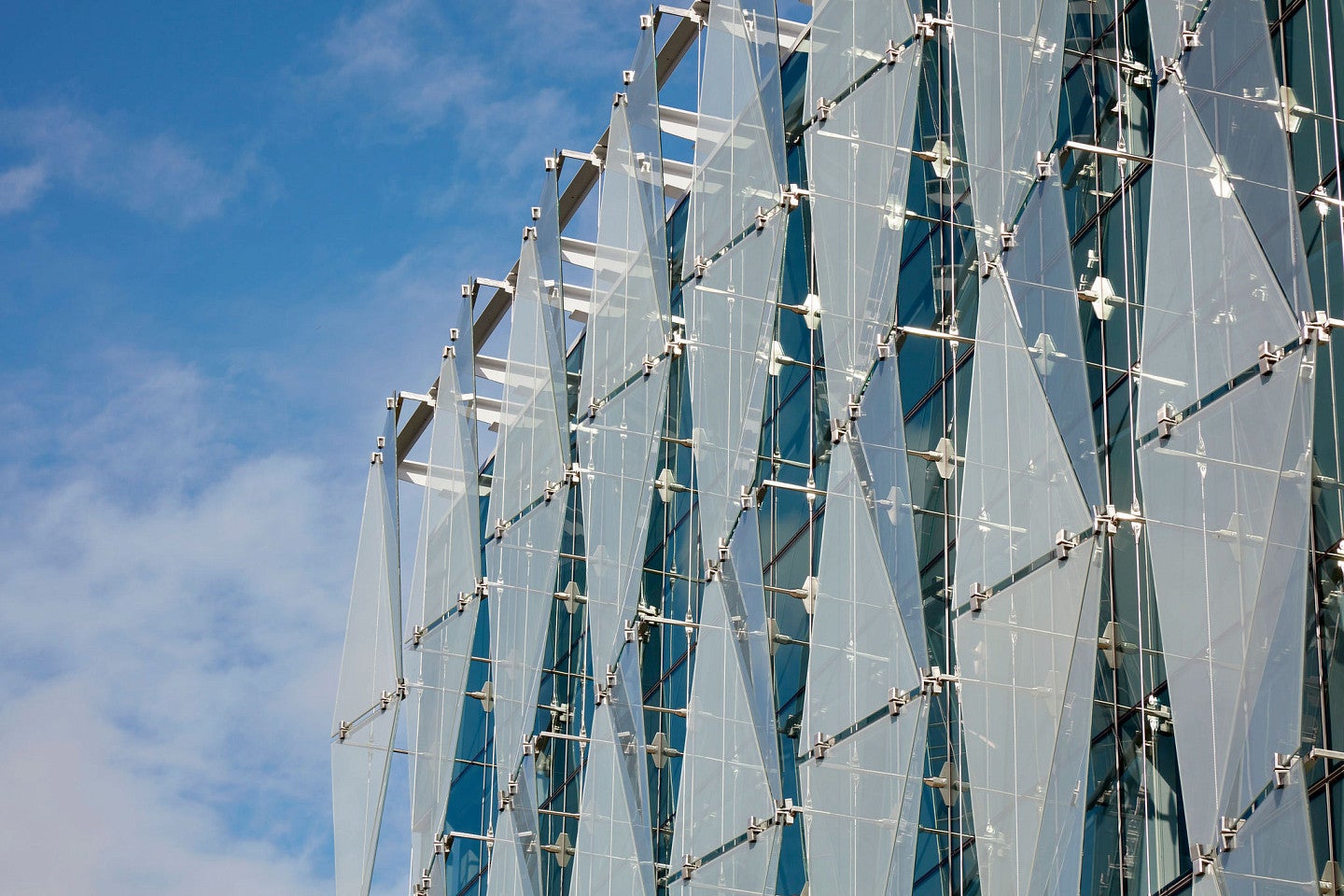
The signature architectural element of the Knight Campus exterior is affectionately known as the Cascading Wall. Inspired by water cascading over rocks, the second skin of glass on the building's southern, eastern, and western façades reduces solar heat inside research environments.
The cascading wall is made up of nearly 650 glass panels that individually weigh 800 pounds, each supported by a cantilevered outrigger system with tension rods hanging from the roof.
Photo by Bruce Damonte
The Terrace
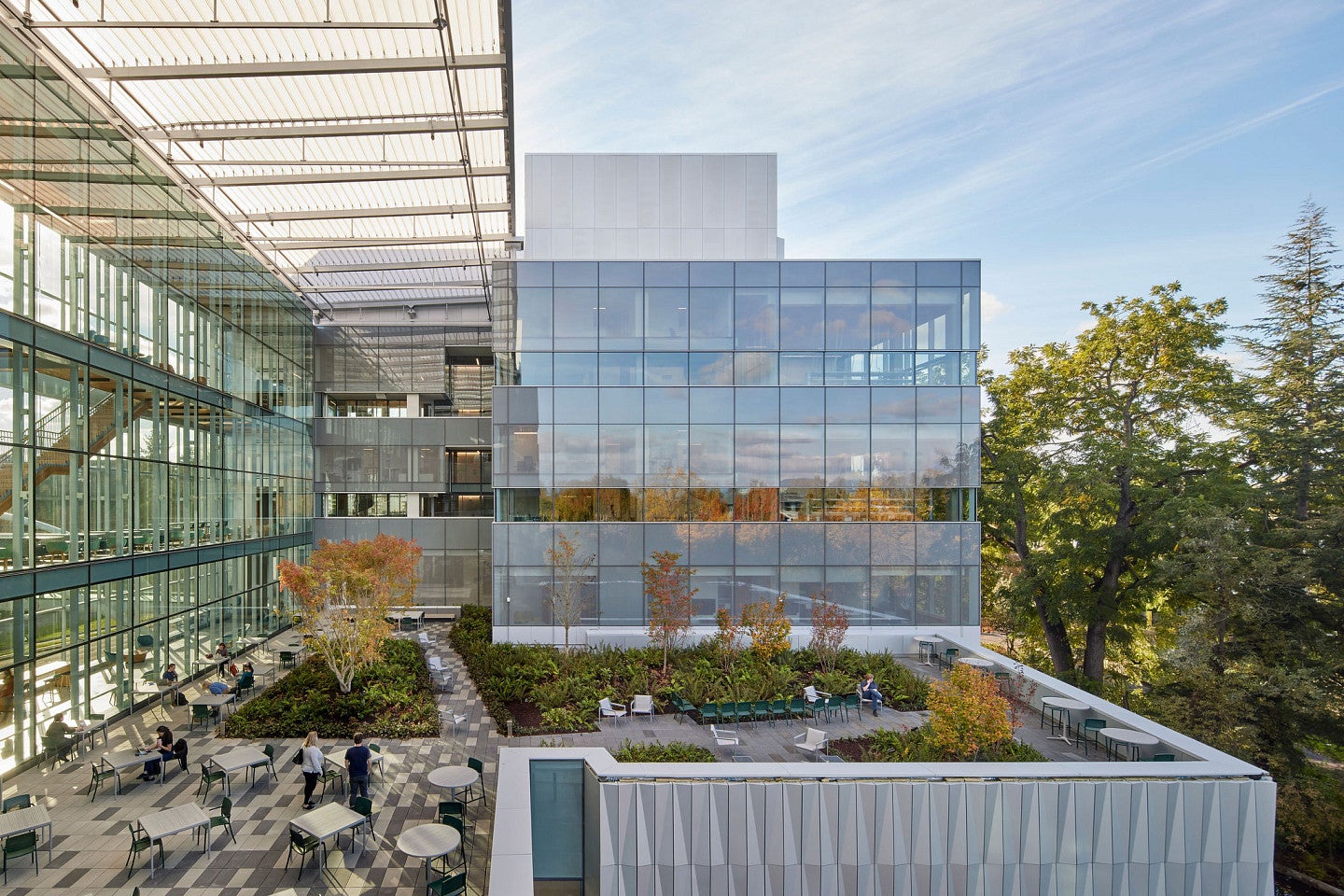
The elevated second-floor terrace overlooks the millrace and the distant tree-covered Coburg Hills. Sheltered under a translucent ETFE canopy — the same material used at Hayward Field — heated concrete benches and fire pits ensure the space is comfortable throughout Oregon's seasons.
A mix of native trees and ferns add to the sense of lushness, connecting the adjacent green corridor to distant views of the Coburg Hills.
The Tschache-Keana Skybridge
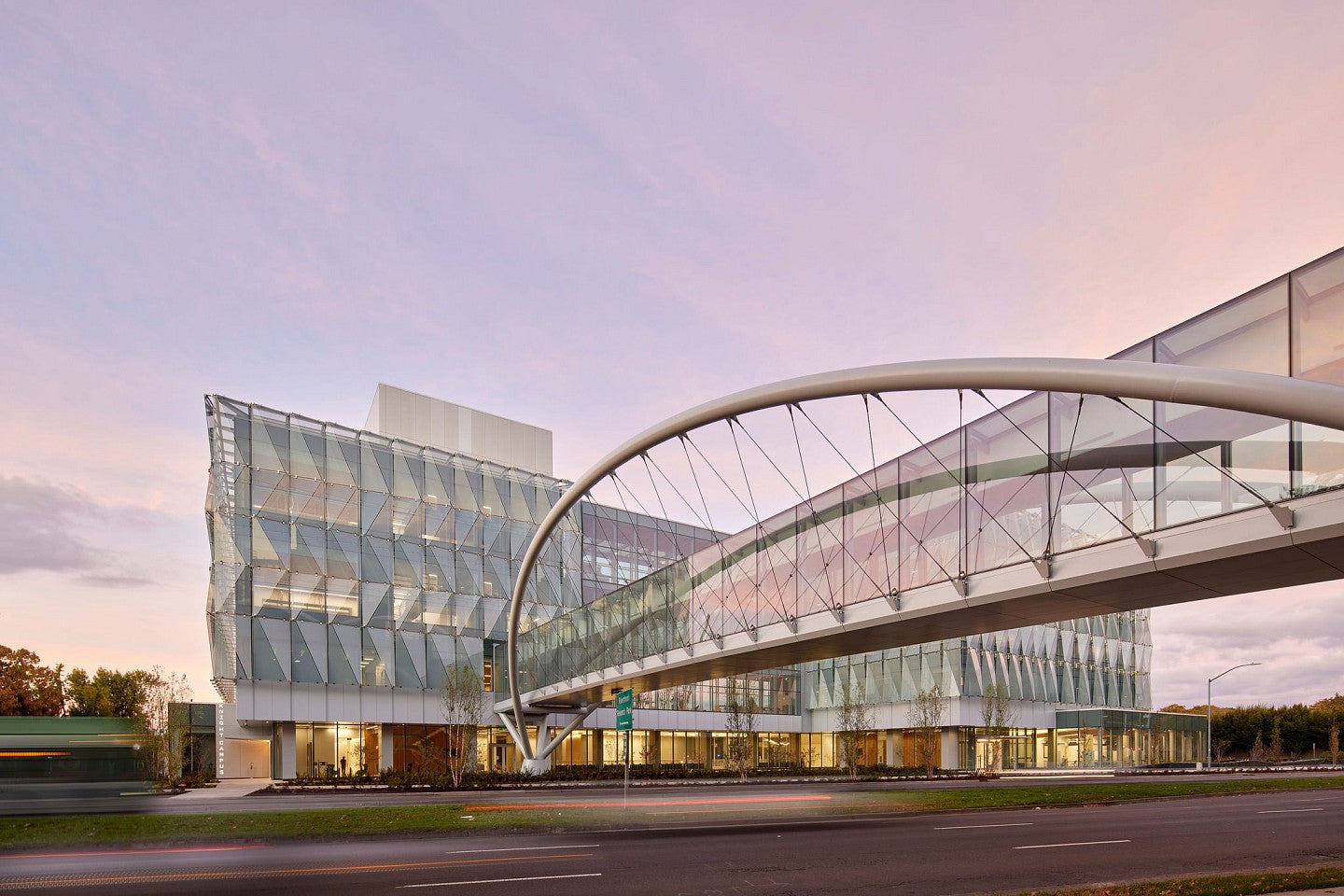
The Tschache-Keana Skybridge (Shock-EE - Keen-Ah) connects to other UO science facilities physically and metaphorically while creating an architectural landmark for the community. The tied-arch bridge — using two butterfly arches and suspension cables — maximizes visual lightness.
Bridge Stats
- Width: 14 ft internal / 48 ft 2 in external
- Length: 190 feet · Weight: ~500 tons
- Height: 50 ft 8 in (top of arches)
- Materials: Structural steel, glass, sheet metal
Research Neighborhoods
The Knight Campus design drew insights from visits to the MIT Media Lab, Harvard, Stanford, and UCSF — ensuring form serves function and collaboration is built in. The signature characteristic is the light-filled, double-height lab spaces, where faculty mezzanines overlook open bench laboratories.
The mezzanine platform suspends cross-laminated timber (CLT) decking from the concrete structure — beautiful, locally sourced, and low-carbon.
The Papé Family Innovation Center
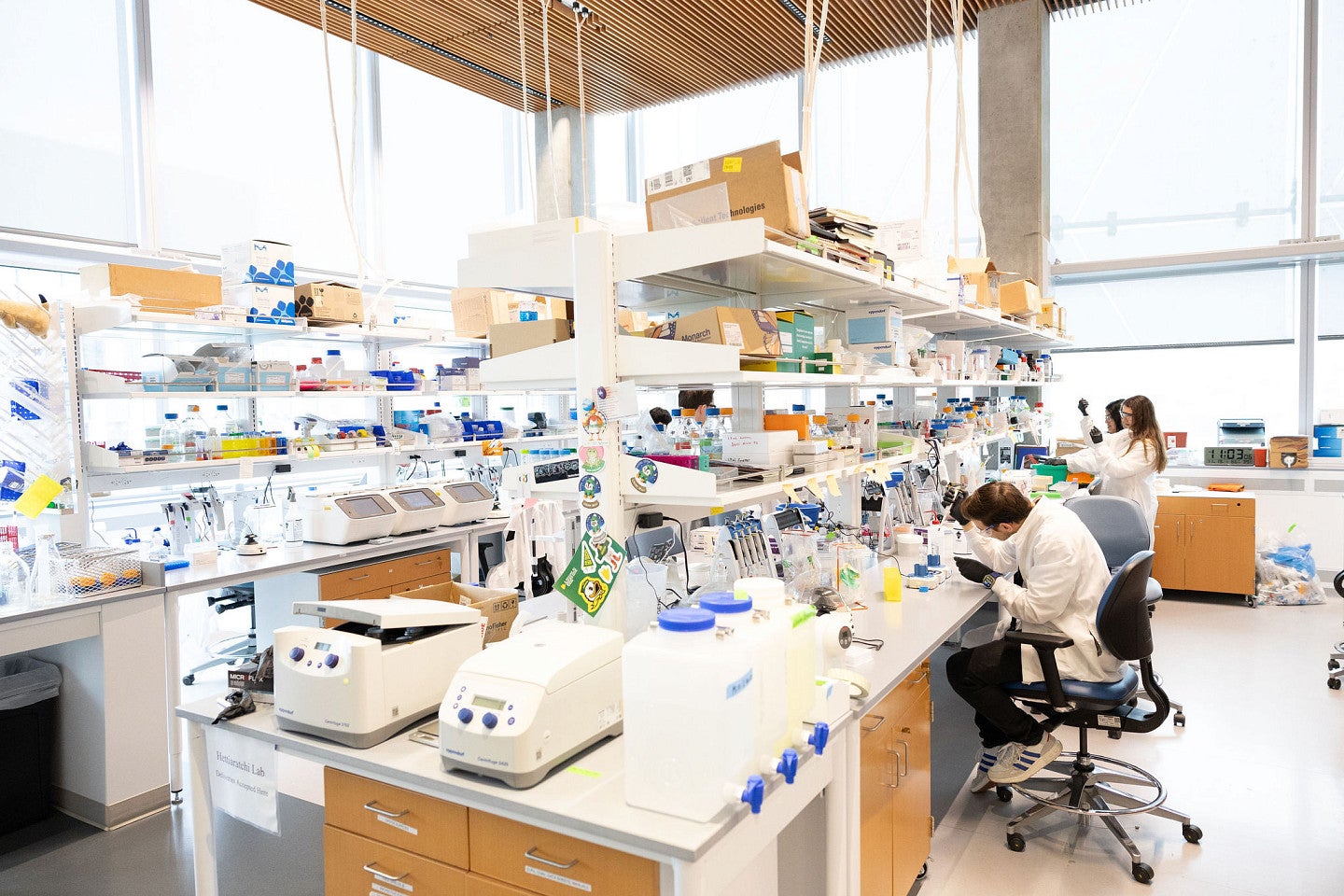
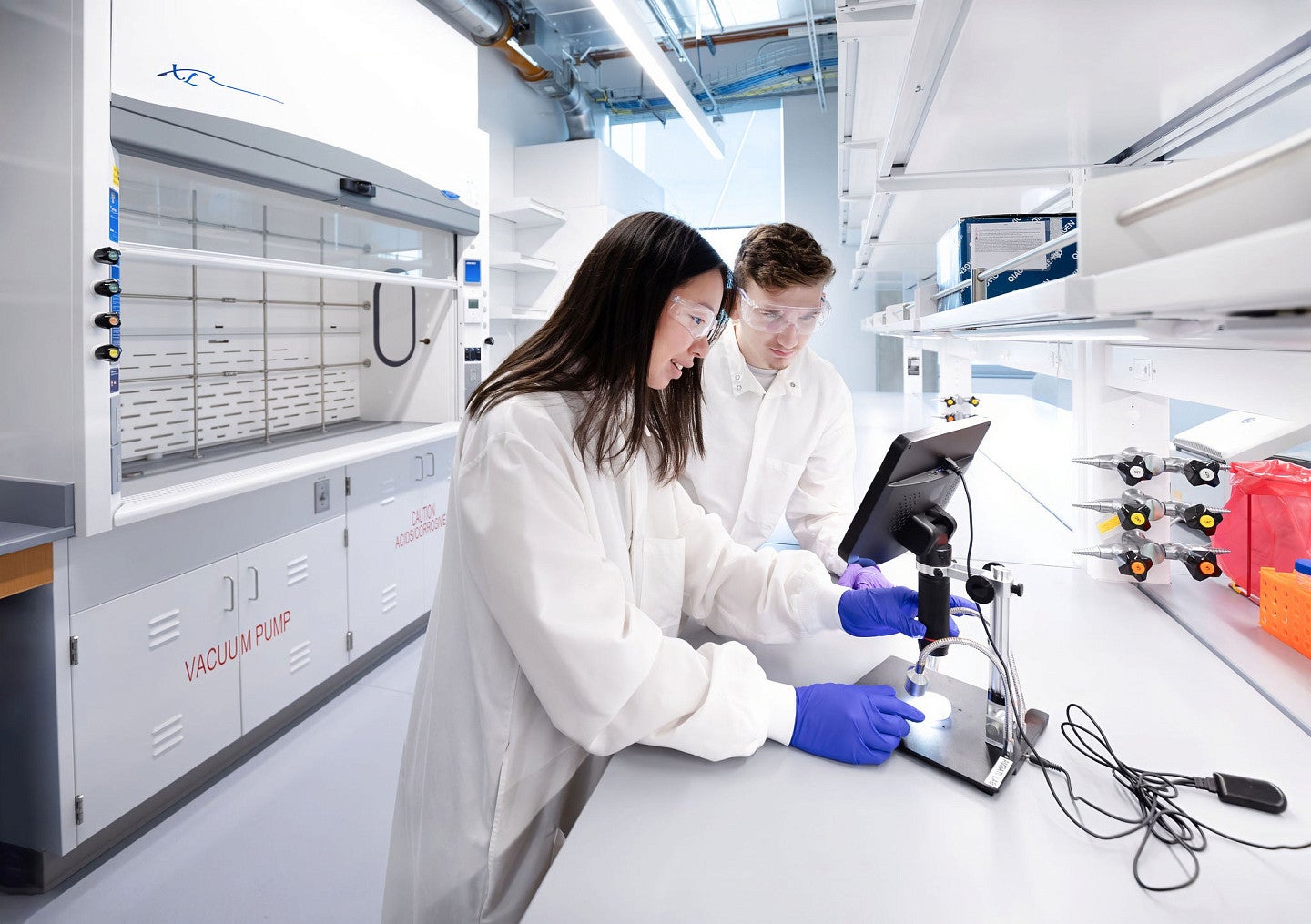
Entrepreneurs can lease wet lab spaces at the Papé Family Innovation Center — a necessity for culturing cells or working with chemicals. It offers a pragmatic mix of meeting spaces, wet lab benches, and procedure rooms designed with one purpose: to expedite scientific entrepreneurship.
Spaces are currently available for lease. Contact KCinnovation@uoregon.edu to learn more.
Core Facilities
The Knight Campus offers state-of-the-art research facilities supporting rapid prototyping, 3D printing, a research clean room, and X-ray imaging — all available to researchers across the university.

Instructional Facilities
The facility includes instructional labs and classrooms designed to foster tomorrow's leaders in industry and academics. These spaces support the Knight Campus Internship Program and the doctoral program in bioengineering — making the Knight Campus a go-to hub at the intersection of biology, engineering, and innovation.

Beetham Family Seminar Room
The 135-person seminar room features natural light from floor-to-ceiling windows looking out on the newly revitalized millrace. Designed to host community events on science, innovation, and entrepreneurship, the dramatic wood ceiling — made with Oregon products by Oregon companies — provides both visual impact and acoustic excellence.

Mass Timber and Wood Features
Natural wood products are used throughout the project to reinforce the vision of the Knight Campus as native to Oregon. Wood features prominently in the connector between towers, mezzanine levels, and 12 mass timber stairways — each featuring cross-laminated timber (CLT) and laminated beam construction sourced from Oregon companies.
Photo by Bruce Damonte

Landscape of Discovery
Native and naturalized vegetation extends out to Franklin Boulevard's edge, creating a corridor of trees shielding the sidewalk from traffic. Groves of Heritage river birch and serviceberry offer dappled light to a fern-clad storm-water basin near the entry, absorbing and filtering rainwater before it flows back into the millrace.

LEED Gold Certification
The Knight Campus is LEED Gold certified — meeting rigorous energy efficiency standards under the Oregon Model for Sustainable Development, restoring the site for the benefit of the larger ecosystem while providing a workplace that fosters social equity, occupant health, and scientific inspiration.
Details on LEED Certification →
Photo by Bruce Damonte

Water
From the building's exterior to its interior, water is used as both metaphor and architectural inspiration — emblematic of Oregon's natural environments and the flows and convergences of the scientific process. The design extends from the signature façade through "The Source" water feature to the restored millrace on the northern side of the building.
Photo by Bruce Damonte

Wellness Center and Bike Storage
The Knight Campus provides short-term and secure bike racks, as well as a wellness center with lockers, showers, and changing rooms. Private wellness areas serve as meditation rooms, lactation rooms, and quiet spaces. Boardwalks and bridges connect to a regional trail network along the Willamette River.

Variety of Common Workspaces
The basement commons provide accommodations for different styles of working, envisioned to be shared by researchers from across campus and the Knight Campus' innovation partners. Scattered throughout are open workstations, single-person phone rooms, huddle rooms, and larger conference spaces. Ample sunlight and dynamic views make the connector a natural social magnet.
Photo by Bruce Damonte

Duck DNA
On the dry training rooms facing Franklin Boulevard, the ceramic frit is applied on two layers of glass so that the pattern shifts visually as you walk into the building. The custom patterning is based on the actual DNA sequence of a duck.
