
Propelling Oregon Forward
Where Hands-On Training Builds Tomorrow's Workforce
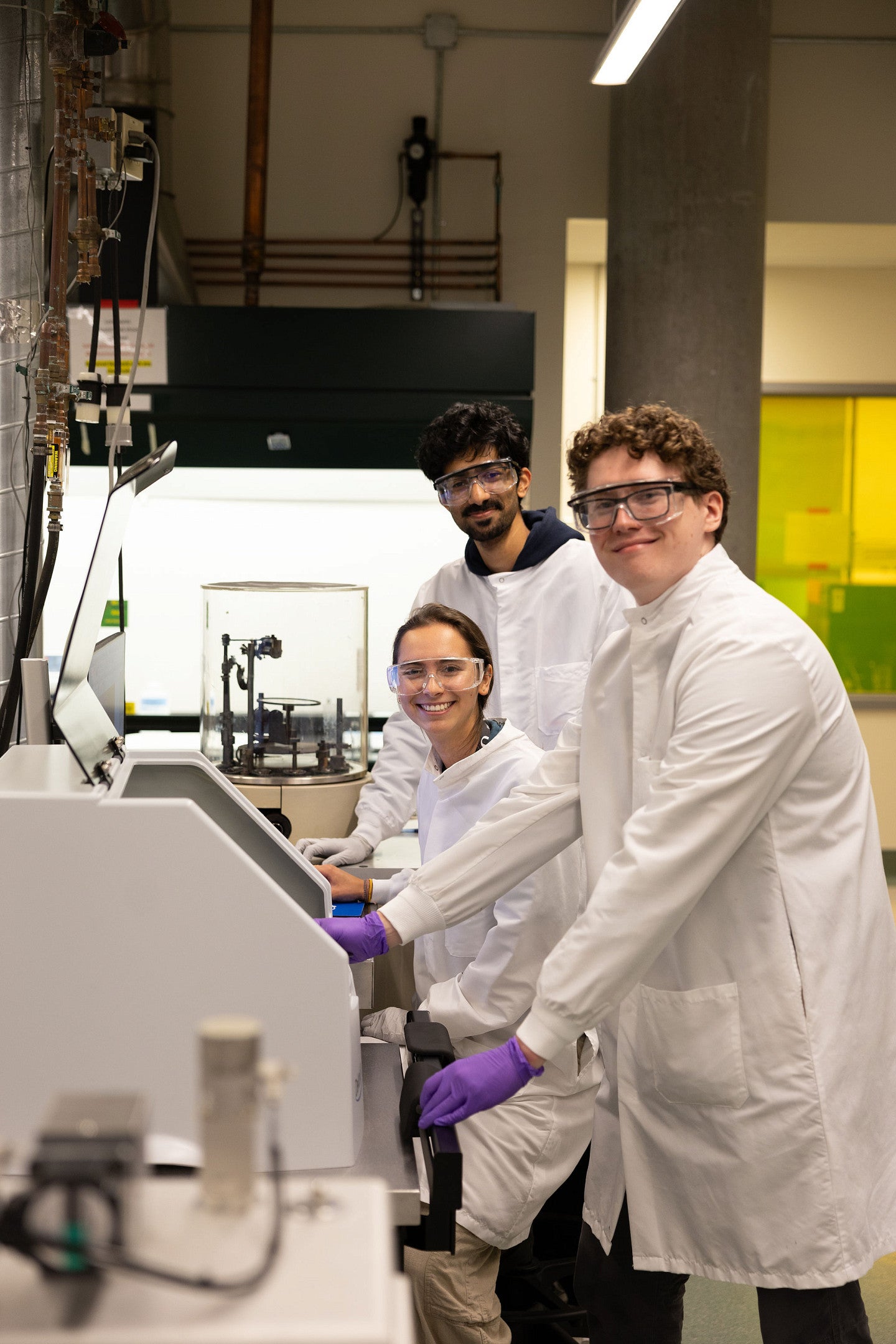
The University of Oregon is building tomorrow's semiconductor workforce today, from the classroom to the cleanroom. Through nationally distinctive hands-on undergraduate, graduate, and pathways programs—paired with unique core research facilities and deep expertise in materials science and quantum technologies—the UO is turning students into industry-ready talent. As a key partner in FAST, Oregon's statewide innovation coalition, the University of Oregon is creating the talent pipeline behind the projected 4,000 new graduates each year and 25,000 jobs FAST aims to deliver—fueling the race to meet an expected national demand for 115,000 semiconductor jobs by 2030.
Programs
Forging Semiconductor Talent
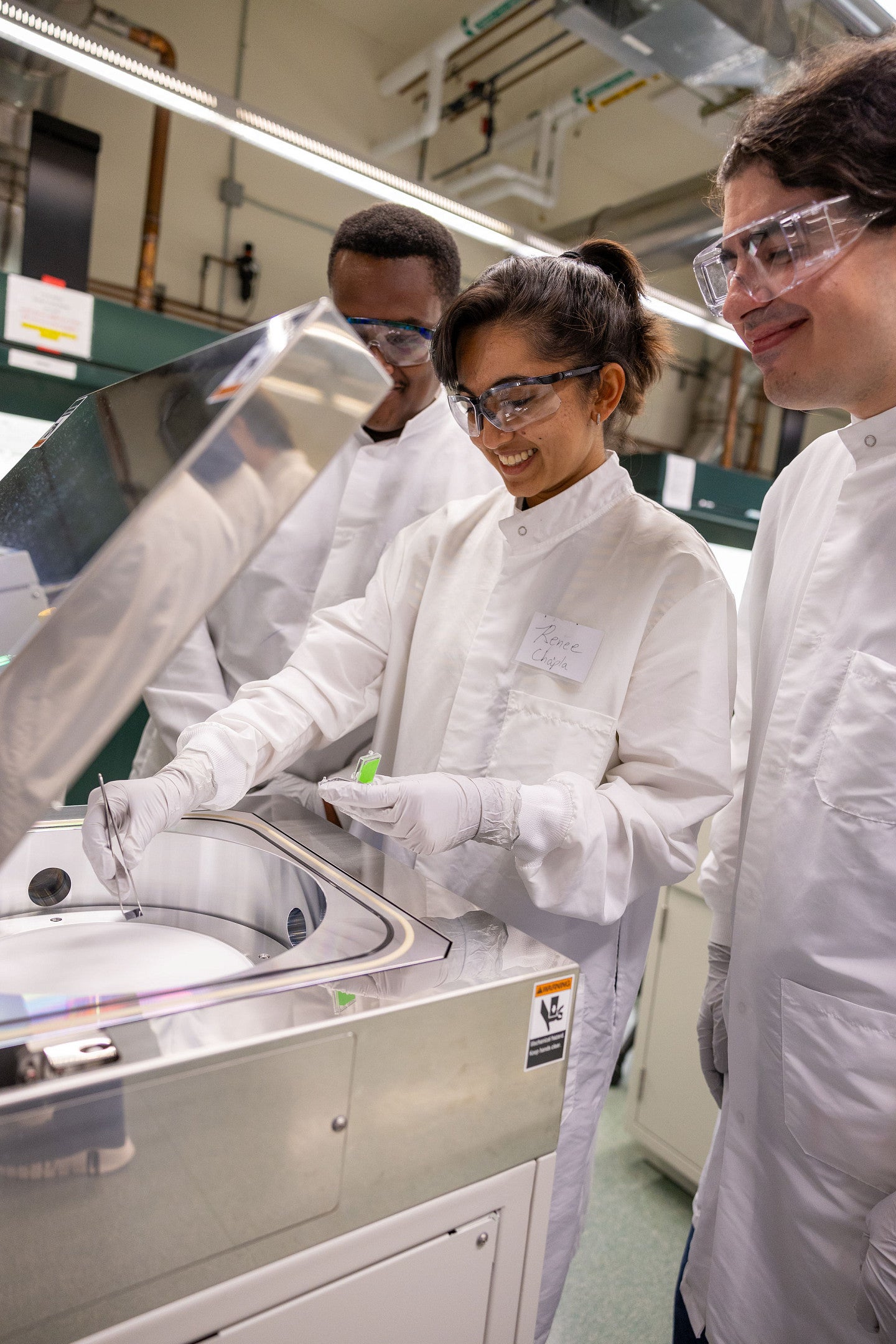
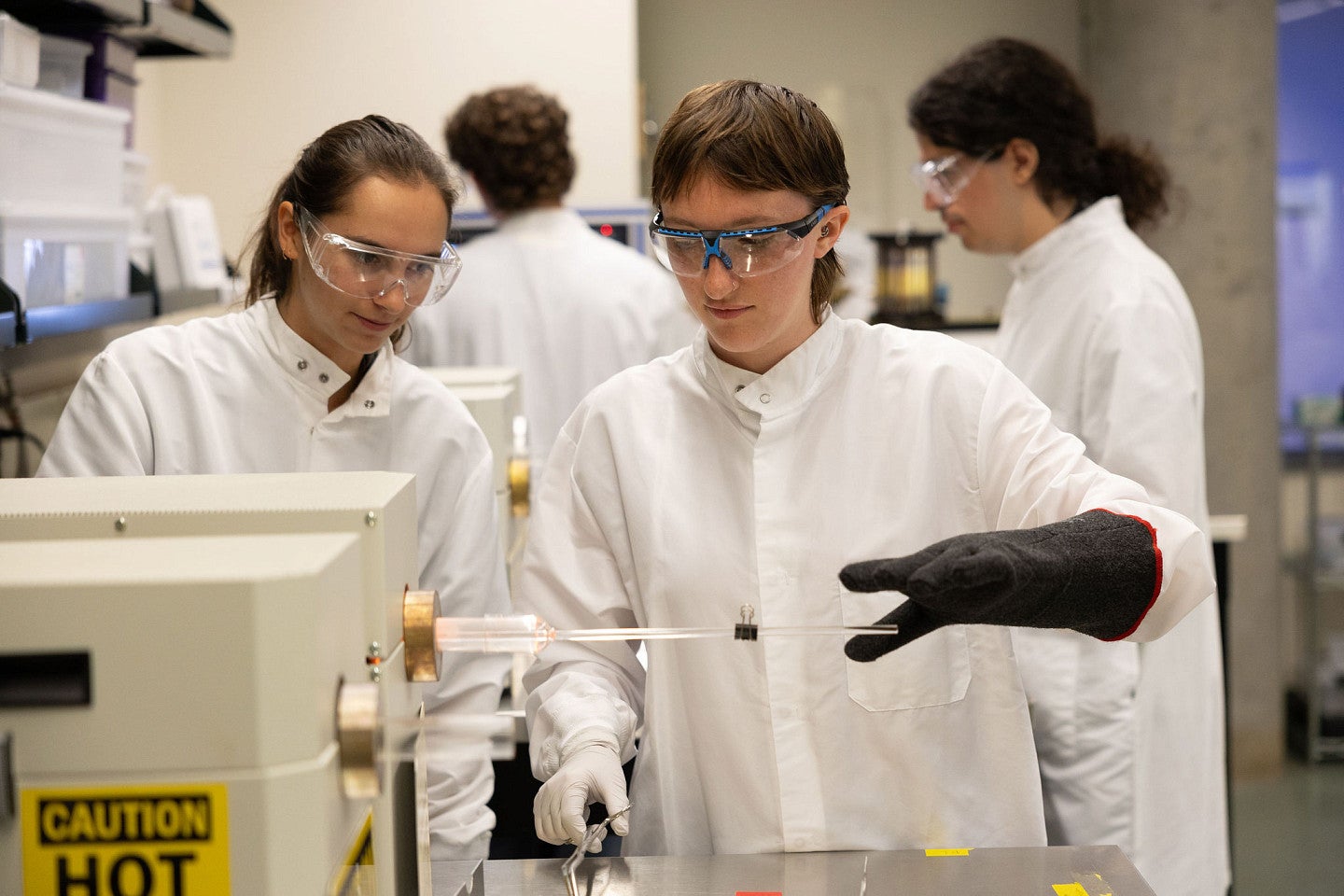
The University of Oregon is building tomorrow's semiconductor workforce today, from the classroom to the cleanroom—training students at every stage and connecting them directly to industry.
Undergraduate Training
Materials Science and Technology
Launched in fall 2025 as the state of Oregon's only undergraduate degree of its kind, it links fundamental science to materials innovation, building a pool of semiconductor-ready graduates.
Industry-Focused Applied Master's Programs
Knight Campus Graduate Internship Program
An accelerated master's built with Intel and other industry partners, featuring a 9-month paid internship across five tracks, including optical materials/devices and semiconductors.
Electrochemistry Master's Program
A first of its kind nationally, graduating 20+ students a year into competitive industry jobs.
Advanced Materials Analysis and Characterization Master's
Hands-on training on major research instruments through the Center for Advanced Materials Characterization.
Applied Physics Master's in Quantum and Technology
A 15-month program that builds the experimental skills needed for the rapidly growing quantum industry and includes integrated professional development and a 6- to 9-month paid internship.
Talent Pipeline
Pathways and Internships
A $4.3M NSF grant plus a $1.3M state grant create a pipeline from community college to undergraduate materials science degrees and then into applied master's programs and paid internships, launching industry-ready graduates into high-wage science and engineering careers. A recent cohort landed offers from Thermo Fisher Scientific, Ouster, Keysight, Intel, and Quantinuum, with average annualized pay of $80,500.
Talent-sustaining initiatives—including a recent $1.5M state fund and $2M in facilities investments for workforce development facilities—fortify and expand the UO's immersive learning, industry internships, shared semiconductor courses, and K-12 pathway programs. These efforts leverage the strength of the Materials Science Institute (MSI), the Oregon Advanced Computing Institute for Science and Society (OACISS), and the Oregon Center for Optical, Molecular, and Quantum Science (OMQ).
Cross-Disciplinary Strength
Research and Expertise
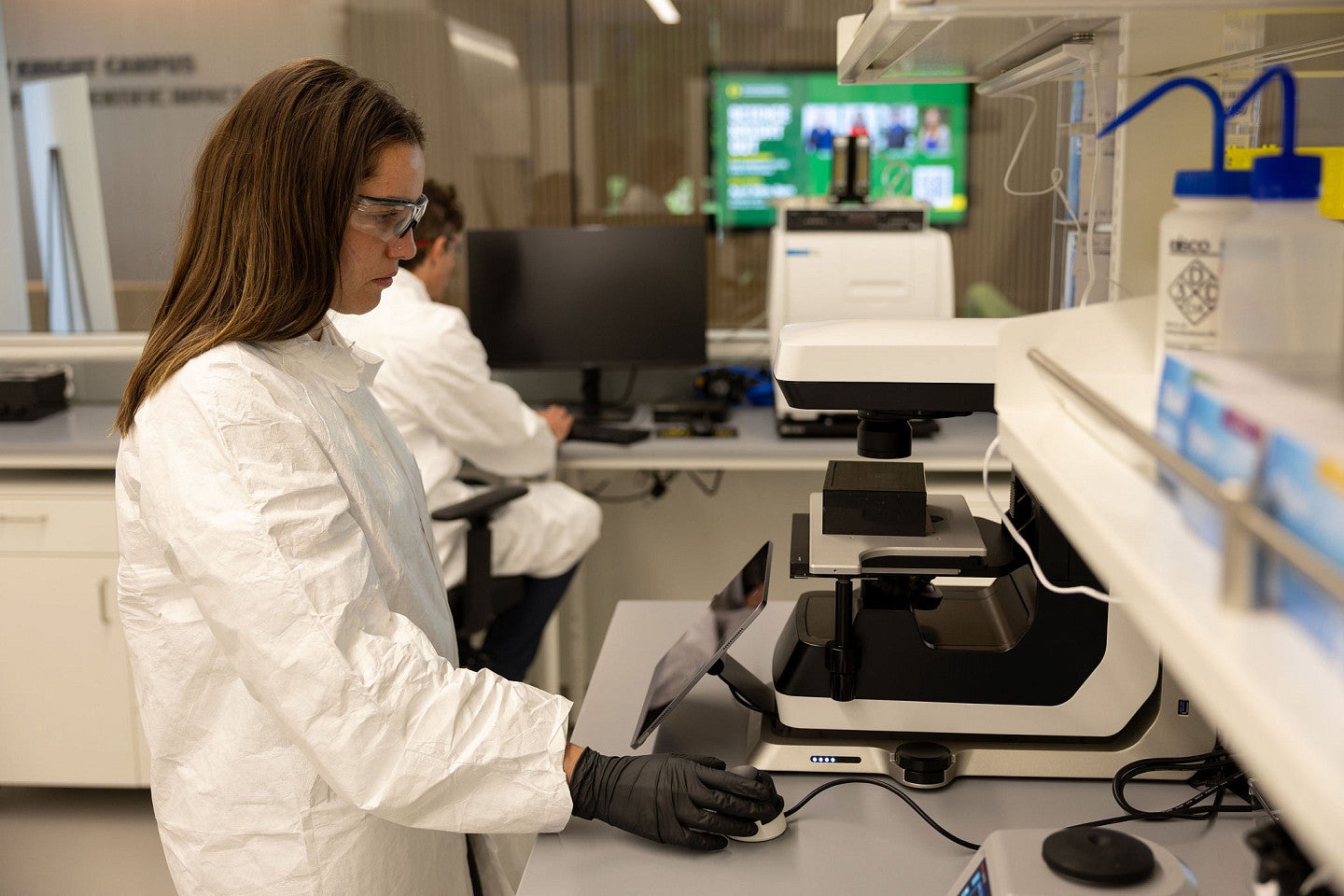
The University of Oregon brings cross-disciplinary expertise directly relevant to next-generation semiconductor, materials, device and manufacturing needs—anchored by the Phil and Penny Knight Campus for Accelerating Scientific Impact, the Materials Science Institute, and other successful initiatives.
Facilities
Unique Core Facilities
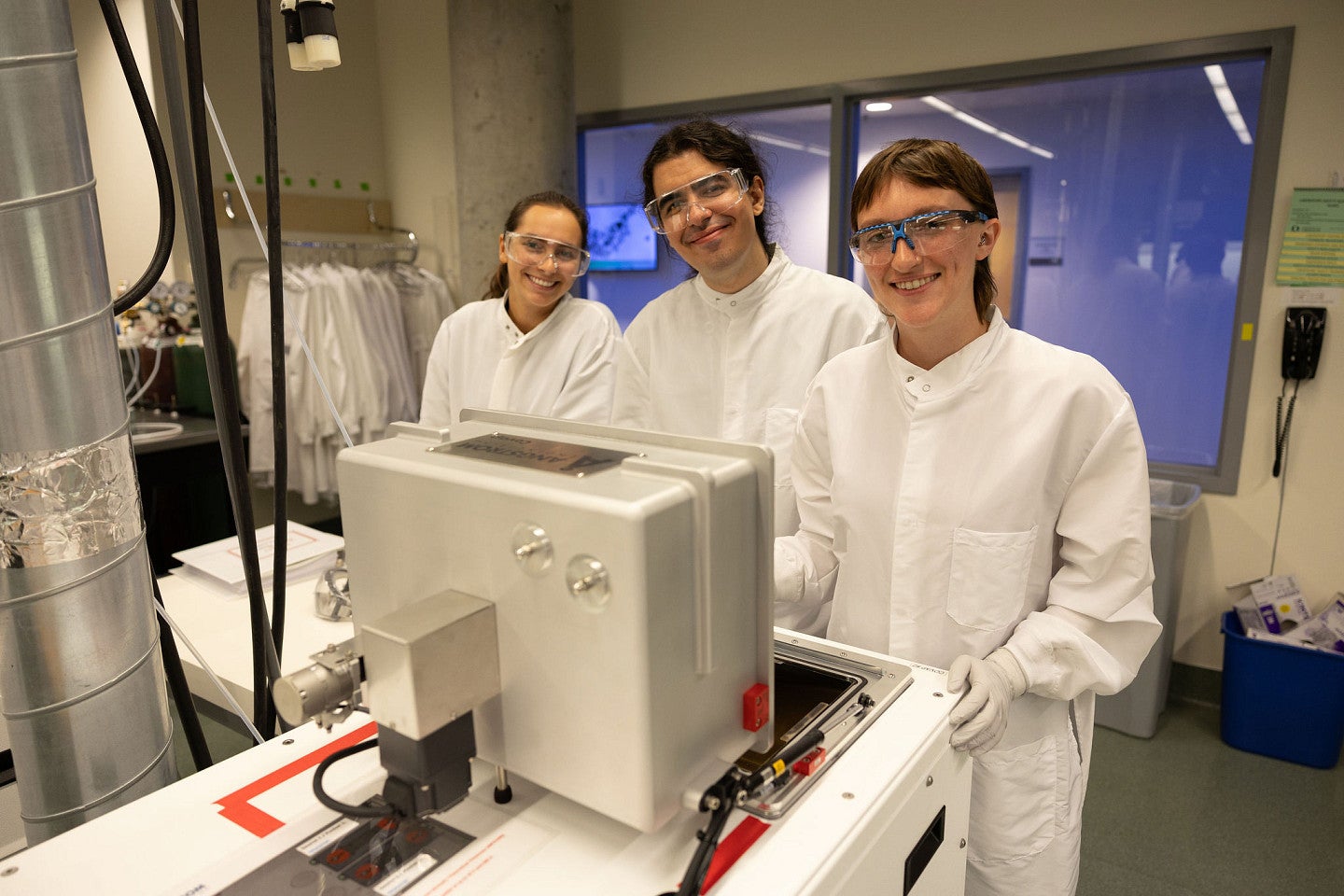
- CAMCOR, the UO's Center for Advanced Materials Characterization in Oregon offers open access to electron microscopy, spectroscopy, and surface analysis tools used by academic and industry researchers alike.
- The UO recently brought online the first aberration-corrected, cold field emission scanning transmission electron microscope at any university in Oregon—providing critical information to engineers making materials at the nanoscale.
- The Knight Campus, a $2B initiative funded by Penny and Phil Knight, houses top-end research equipment, overseen by expert staff to facilitate use across academic, commercial, and government industries.
- A full-service, class 1000 cleanroom supporting education, research, and partner use—from device fabrication to process development.
Broader Context
A Statewide Innovation Coalition
The UO is part of FAST (Frontiers of Advanced Semiconductor Technology), one of 12 nationwide partners that recently received an NSF Regional Innovation Engine award and is positioned to receive up to $160M over 10 years. FAST aims to deliver by year 10:
4,000
new graduates/year
25,000
jobs
$6.5B
in regional GDP growth
180
startups
Read More About the FAST NSF Regional Innovation Engine Award